
The Bounce is a Illusion? The Bond Market Has Answered

 Prefer us on Google

Original Title: The Bond Market Isn't Buying This Rally. Neither Am I.
Original Author: KURT S. ALTRICHTER, CRPS
Translation: Peggy, BlockBeats
Editor's Note: As the stock market swiftly recovers from the recent sell-off, approaching historical highs, a narrative of "all risks cleared" is once again taking the lead. However, this article reminds us that by only looking at the equity market, it is easy to misjudge the current true environment.
The signals from the bond and oil markets are not consistent: rising interest rates and high oil prices indicate that inflation remains sticky, the Fed's policy space is limited, and geopolitical conflicts have not yet materialized. In contrast, the stock market is pricing in low inflation, rate cuts resuming, manageable costs, and conflict resolution, which are highly idealistic premises.
The author believes that this rebound is more driven by momentum than fundamentals. Fueled by the trading behavior of "fear of missing out on the rally," prices can deviate from reality in the short term, but ultimately, they still need to return to the range determined by macro variables.
When there is a divergence between different asset classes, the real risk often lies not in who is right or wrong, but in how this discrepancy is resolved. The current issue is not whether the market is optimistic, but whether this optimism has already outpaced the data.
The following is the original text:
"Rule 2: Excess in one direction causes an opposite excess in the other direction." — Bob Farrell
The S&P 500 Index has fully recovered all its losses during the US-Iran conflict. As of yesterday, the index was up 1% from February 27 (the day before the first strike on Iran), just a stone's throw away from a new all-time high (less than 1%).
In just 10 trading days, the market has completed a full round trip.
I'll be blunt; if you're only looking at the stock market now, everything seems to be "back to normal." War broke out, the market fell, then quickly rebounded, everything is back on track, and everyone moves forward.
But if you widen your view, this is not the true picture of what's happening.
The bond market has not confirmed this rally.
The oil market has also not confirmed this rally.
When the world's two most important markets are telling a different story from the stock market, this is by no means a signal to be ignored.
So, what is the current stock market pricing in?
For the S&P 500 to be above its pre-war level, the market actually needs to simultaneously believe in the following:
The current oil price is not enough to substantially curb consumption
The Fed will ignore overheating inflation data and still choose to cut rates
Higher raw material and transportation costs will not erode corporate profit margins
The Middle East conflict will be close enough to resolution within six months to no longer pose a risk
Maybe things will really unfold this way. I'm not saying it's impossible. But this is a rather radical set of assumptions, and the data released by the bond and oil markets at present do not support these assumptions.
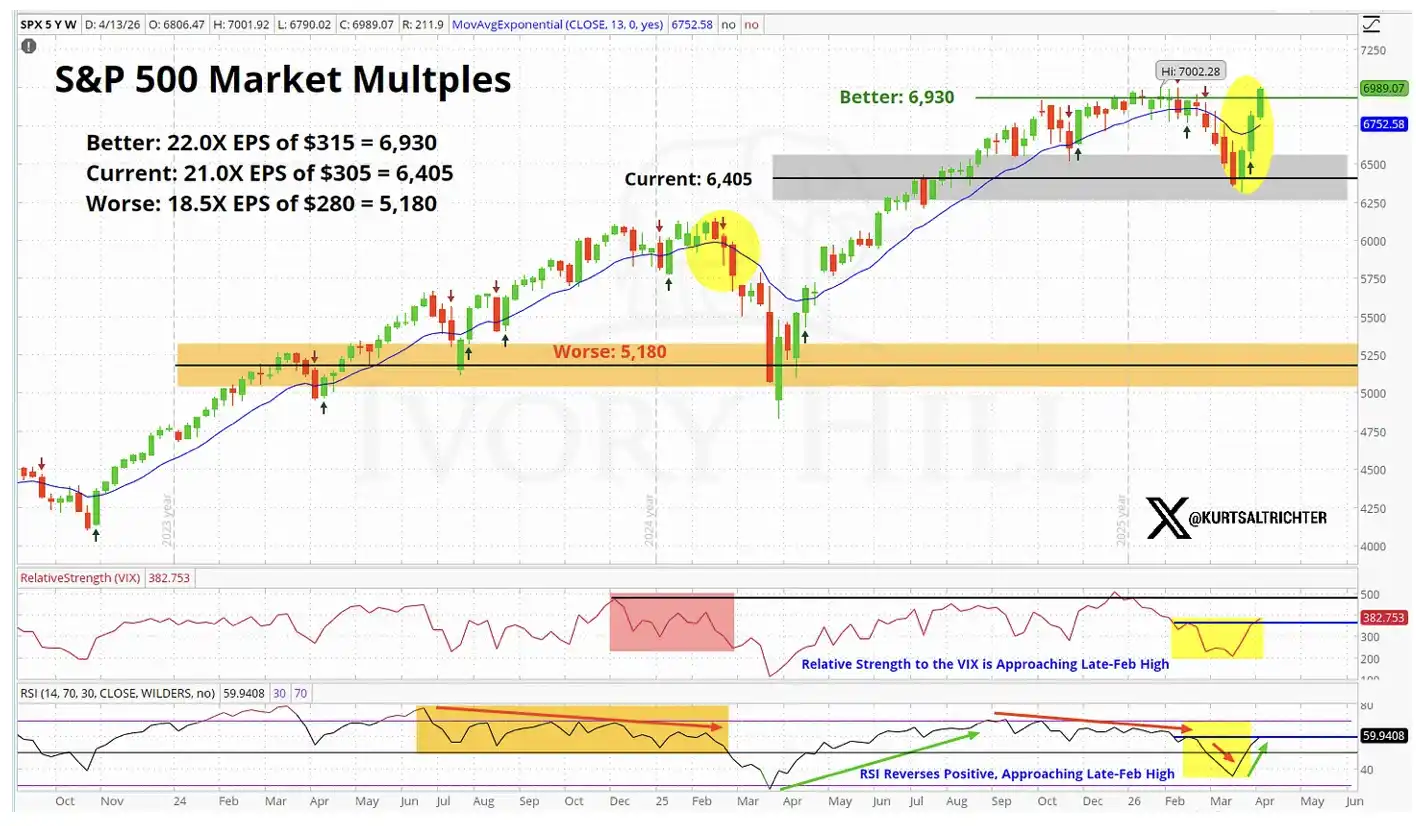
From a fundamental perspective, the stock market's pricing is already close to "perfect expectations."
Let's look at some more specific data
On February 27, the day before the war broke out, the closing figures for key indicators were as follows:
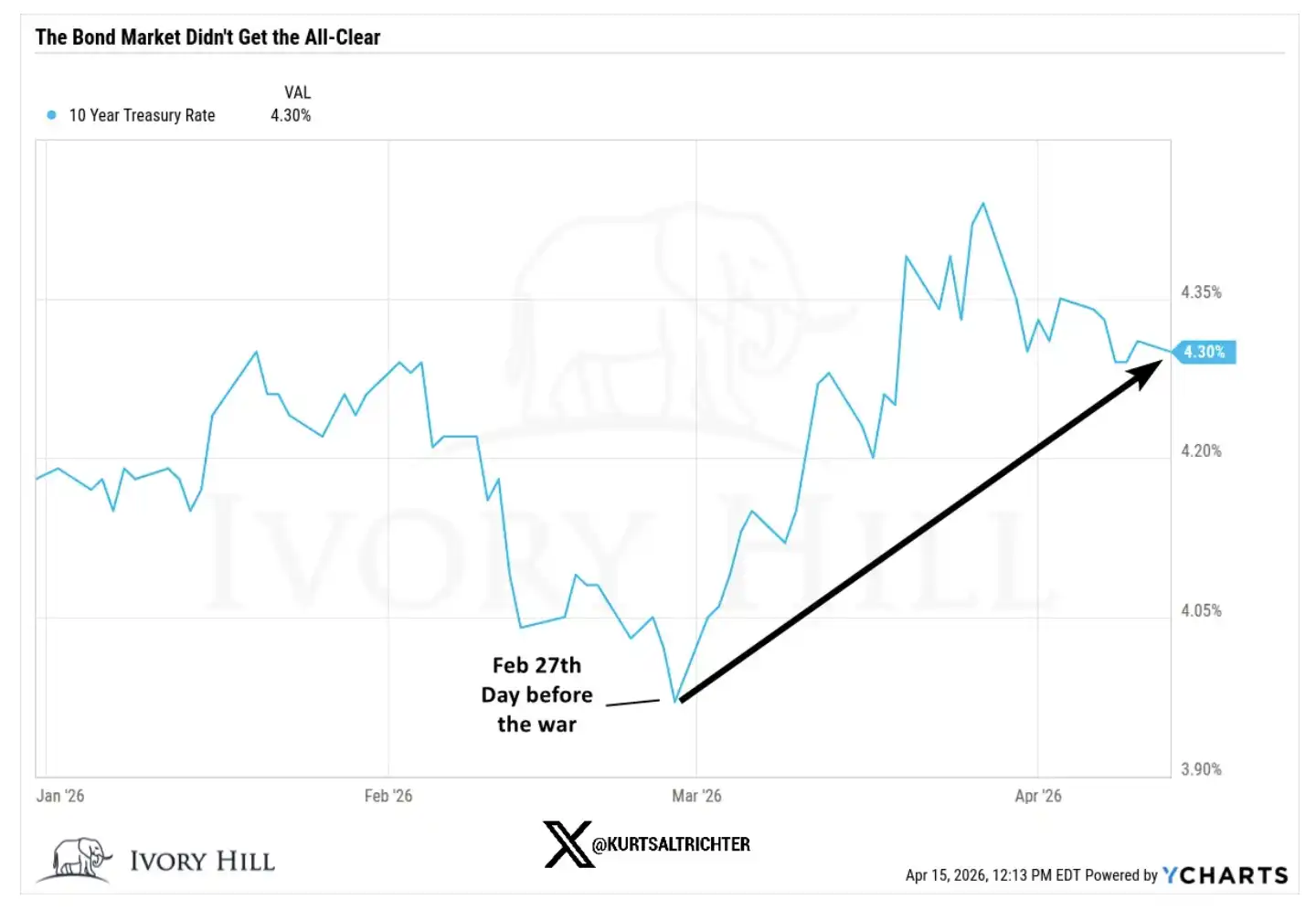
10-Year U.S. Treasury Yield: 3.95%, closing at 4.25% yesterday, up 30 basis points from pre-war levels
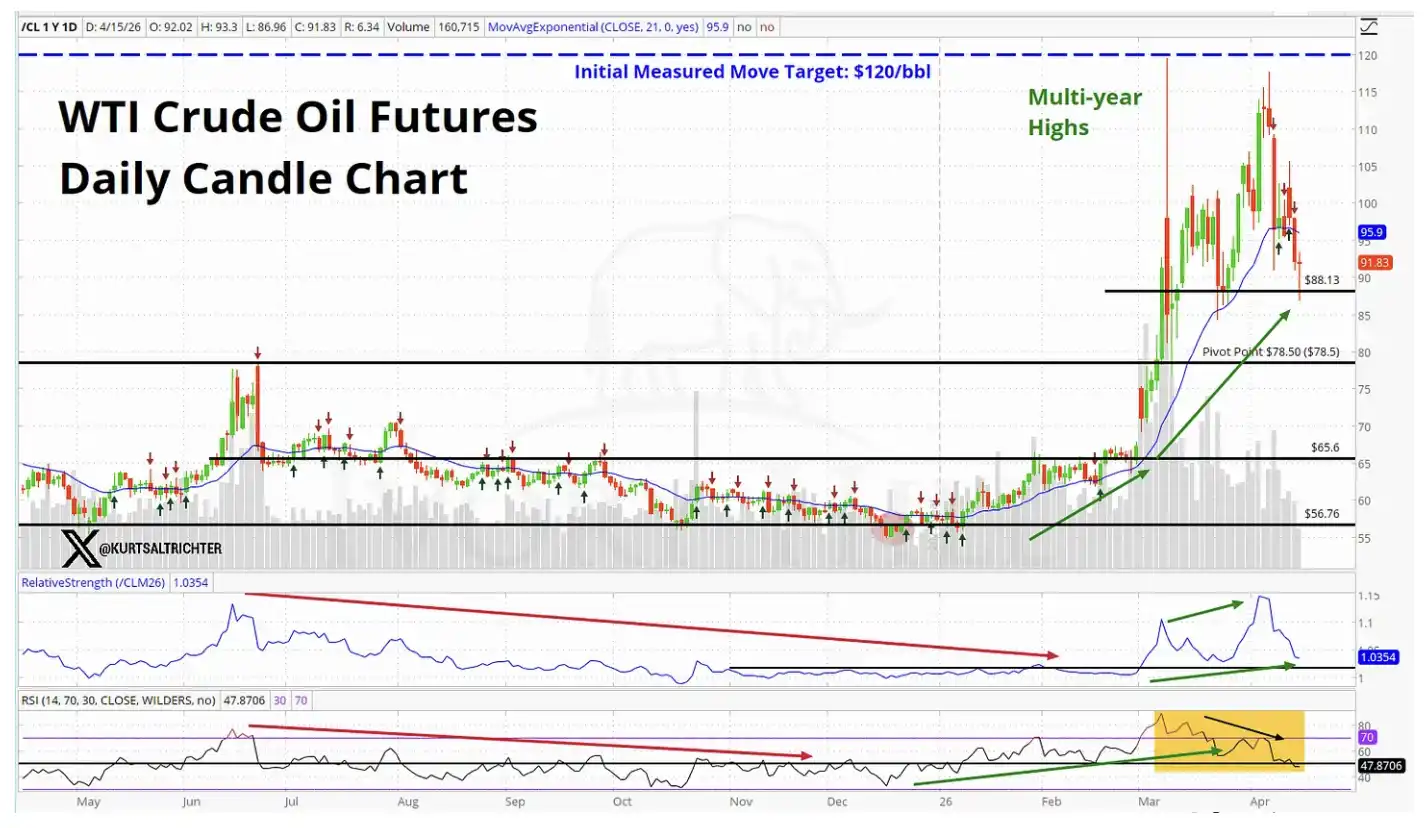
WTI Crude Oil: $67.02, currently about 37% higher than at that time
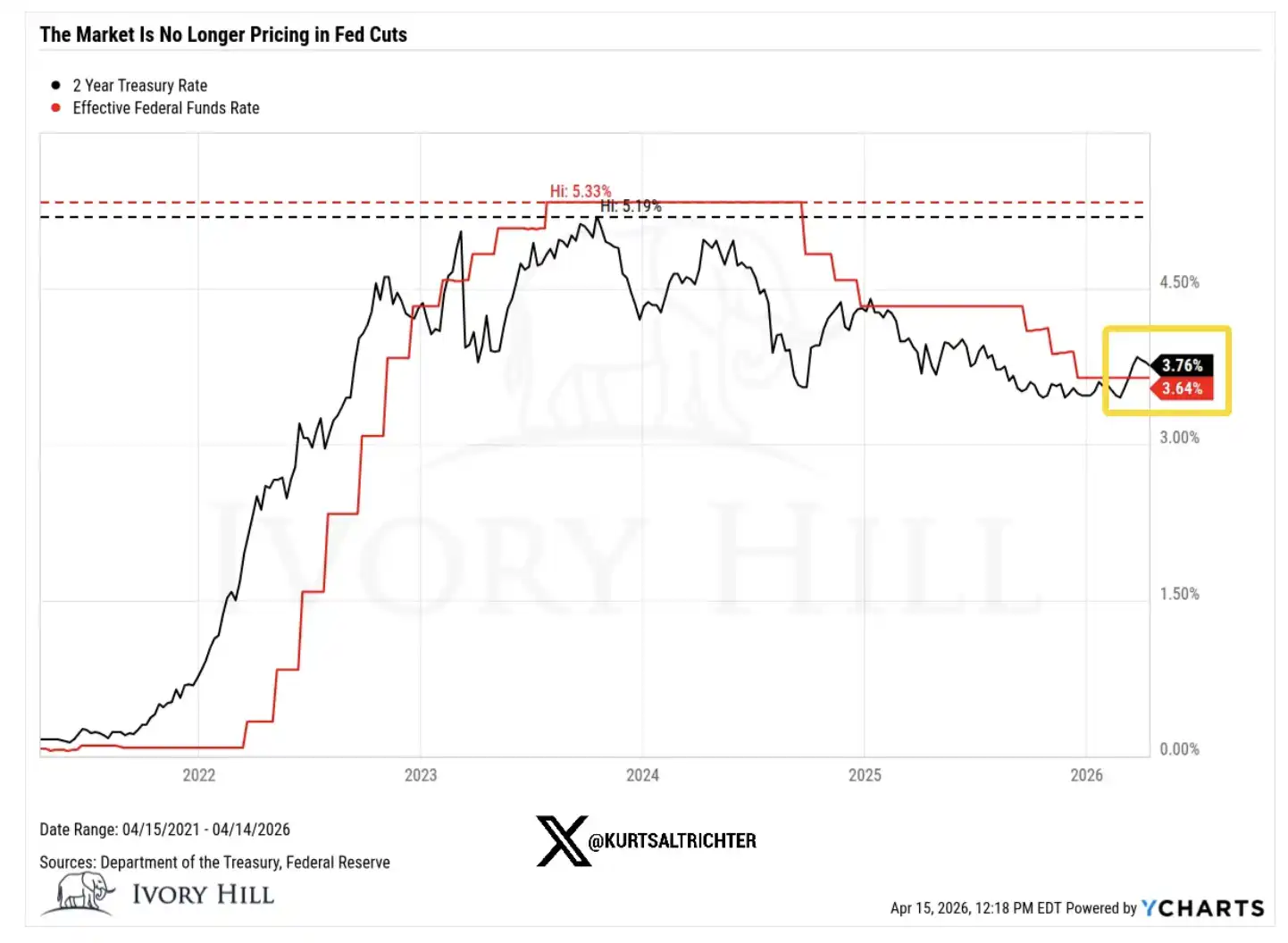
2-Year U.S. Treasury Yield: 3.38%, closing at 3.75% yesterday, up nearly 40 basis points from the pre-war level
Now, let's break down the implications behind these changes one by one.
The 10-year yield rising 30 basis points after the war broke out is not because the bond market is more optimistic about economic growth. Current consumer sentiment is weakening, and confidence remains fragile. This upward rate movement is essentially the bond market quietly pricing in inflation.
The signal it conveys is clear: higher oil prices are transmitting to the overall price system, and the Fed's future policy space may not be as accommodative as the stock market assumes.
Oil prices have risen by 37% in 6 weeks, which is not a reflection of what the market should exhibit when believing that a real, lasting agreement is about to be reached between the U.S. and Iran.
If traders were truly confident in a sustainable ceasefire agreement, oil prices would have already dropped to the $70 range and continued downwards. However, reality tells a different story. Oil prices are still holding at high levels, indicating that the crude oil market has not priced in the same "conflict resolution on the horizon" expectations as the stock market.
Meanwhile, the 2-year U.S. Treasury yield remains 40 basis points higher than pre-war levels, posing a direct challenge to the narrative of "Fed rate cuts incoming."
The 2-year yield is the most sensitive indicator in our interest rate outlook observation, reflecting the Fed's policy path more directly than any other asset. Currently, the signal it is sending is that the Fed's maneuvering room is smaller than the market imagines, which will impact almost all valuation logics supporting this stock market rally.
So, who is making the right call?
The stock market may be right, and I am willing to acknowledge that. If a substantive ceasefire agreement does materialize, bond yields could quickly retreat, and once the supply issue sees a credible resolution, oil prices could also see a significant drop. This wouldn't be the first time the stock market led the way, with other markets playing catch-up or "filling the gap" later on.
But there is another explanation that I believe is currently underestimated.
A significant portion of this rally is not fundamentally driven but rather momentum-driven. Traders are reluctant to short-sell in an uptrend, a behavior that continuously boosts the market. Such buying pressure can indeed prolong the trend more than necessary.
However, it does not alter the underlying logic.
The underlying reality is that oil prices remain high, interest rates are still increasing, and the Fed's room for rate cuts is even more limited than what the bulls require.
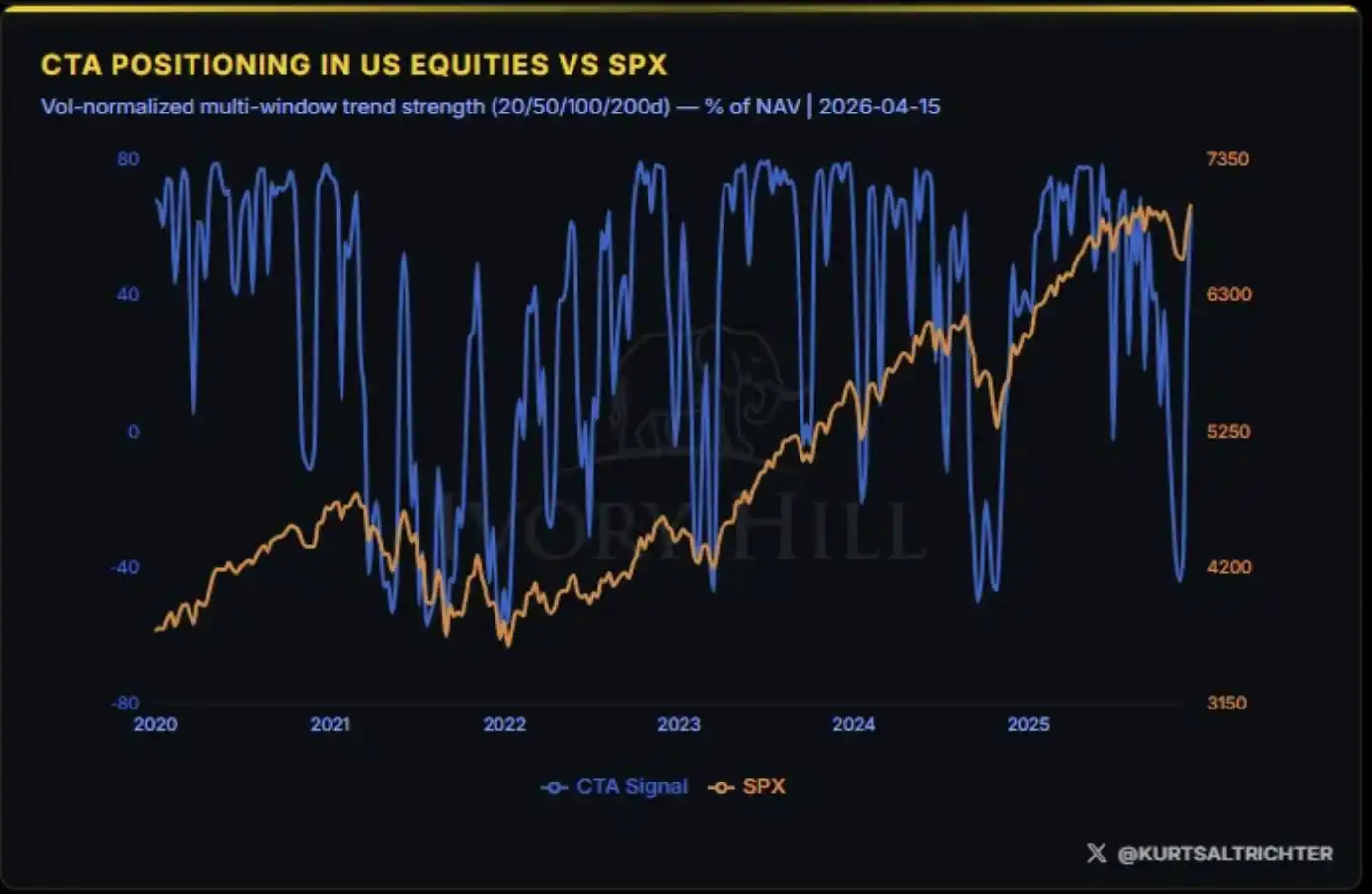
Rallies driven by fundamentals are often more sustainable, while those driven by momentum are typically more fragile and short-lived. When considering whether to add positions near historical highs, this difference is especially crucial. As depicted in the market valuation chart above, the current stock market has already priced in a "perfect scenario."
My Actual Assessment
Over the past 10 days, there has indeed been some improvement, and I will not deny that. I am not someone who arbitrarily takes a bearish stance.
However, there is still a significant gap between the pricing of the stock market and the reality reflected in bonds and oil, and this gap has not narrowed. I am closely monitoring this point.
Currently, the stock market is at the most optimistic end of the spectrum; while bonds and crude oil are closer to the middle, reflecting a world where inflation still exists, the Fed has limited policy space, and conflicts are not yet truly resolved.
This divergence will ultimately be resolved, and there are only two paths:
Either a true ceasefire agreement is reached, oil prices fall back to around $70, the Fed gains clear room for rate cuts, ultimately proving the stock market right;
Or none of this materializes, the stock market declines, moving closer to the levels reflected by bonds and oil.
Currently, there is no sign that bonds and oil are converging with the stock market; rather, it seems like the stock market needs to move lower to "align" with them.
The next inflation data will be released on May 12. If my assessment is correct, with CPI above 3.5%, the rate-cut narrative for 2026 will basically come to an end.
If you continue to add leverage at this point, you are essentially betting that everything will develop in the most ideal direction: the war will end smoothly, without any "Trumpian sudden remarks" interference; inflation will remain under control; the Fed will cut rates as planned; and corporate profits will stabilize. All four of these things must happen simultaneously. If any one of them deviates significantly, the market's downward adjustment process is likely to be swift and severe.
On the other hand, I prefer to remain patient rather than chase an uptrend that is being "quietly denied" by the two major asset classes. If the long-term signals point to buying, we will naturally incrementally increase our positions according to the strategy.
And don't forget—the only thing that's certain is that everything will eventually change.
-- Price
This content is provided for general informational purposes only and doesn't constitute financial, investment, legal, or tax advice. Any events, rewards, online promotions, or related information mentioned herein should not be considered a recommendation, solicitation, or invitation to purchase, sell, trade, or otherwise deal in any crypto assets. Crypto assets are highly volatile and may result in loss. The availability of WEEX services, products, and related events may vary by region. You are responsible for ensuring that your participation is in accordance with applicable local laws and regulations.
You may also like

Key Market Insights from December 12th, how much did you miss out?

CZ's new book reveals the past of FTX: SBF has high emotional intelligence but has repeatedly poached and smeared Binance

Insurance capital giant's initial position of 20 million USD, State Street launches treasury custody, Iris achieves full retention
Kroll gives Ripple Prime a "medium quality" BBB rating, which is the lowest investment grade

Average Earnings per Person $90 Million, Earth's Biggest Private Buyer of Gold

Musk: New Roadster Sports Car May Have Flight Capabilities

Fed’s Sept. 17 Rate Cut Sparks Initial Volatility but Sets Stage to Boost Bitcoin, Gold, and Stocks Over Time
As markets digest the Federal Reserve’s much-anticipated interest rate decision on September 17, there’s a mix of short-term…

Hong Kong SAR Government Prepares for Third Sovereign Green Bond Issuance

Ardoino’s 24/7 asset plan depends on buyers willing to wait for cash
Wallets, fintechs, and platforms target the freelancer market: why Argentina is a key market
Greece ends years of crypto tax uncertainty with new 10% levy on Bitcoin profits
Ethereum software bug triggers emergency fixes across major layer-2 networks

Kraken Owner Invests in Altcoin, Considers Further Purchases. You Should Recognize Him

Stablecoins offer sub-cent payments, Armstrong says, as critics flag risks

Analysis: Stablecoins, Payments, and Prediction Markets Have Become New Growth Points for Crypto Companies, but Profitability Remains Challenged

Nubank Suspends Crypto Withdrawals: What We Know So Far

Buffett's Successor Faces Setback, Google Holdings Show $3 Billion Unrealized Loss

Banking Outage in Japan: 128 Banks 'Frozen' at Once

Beyond APY: Saying Goodbye to Black Box Trust and Reassessing the Security Logic of ETH Staking

Argentine Bitcoiners Debut “The Genesis Of Satoshi Nakamoto” Artwork In Downtown Buenos Aires
Broadcom (AVGO) : AI Growth, Fund Positioning, and Guarantee Risk
Broadcom (AVGO) recently fell with the semiconductor sector, closing down 10.43% at $291.53 on November 5. The shares rebounded more than 4% in premarket trading on November 6. Concerns that election results could lead to tighter AI rules and slower data center approvals contributed to a broad sell-off, with a semiconductor index falling about 12%. The move appears tied mainly to sector sentiment and policy concerns, with no clear company-specific negative catalyst identified.
Institutional trading and AI growth expectations are also in focus. ARK funds sold about $134 million of Broadcom shares over two sessions while adding to SpaceX. Citi maintained its Buy rating and projected that Broadcom’s AI semiconductor revenue could reach $115 billion in fiscal 2027, roughly doubling year over year. Broadcom had approximately $179.2 billion in signed contracts as of the prior quarter, while analysts estimated fourth-quarter AI chip revenue at about $21.7 billion. These forecasts will need to be tested against future results.
Contingent guarantees are another point for investors to monitor. Broadcom is providing guarantees tied to Anthropic’s AI rack-leasing arrangement, involving about $29 billion in the first phase and a second-phase plan of up to $43 billion. Banks plan to issue $21 billion in bonds to support related chip financing. The guarantee amounts are not the same as debt already incurred, but they add a potential risk to assess. Broadcom is scheduled to report its next quarterly results on December 9, when management’s outlook for fiscal 2027 AI demand will be closely watched. This article is for informational purposes only and is not investment advice.

Netflix (NFLX) Stock Rebounds: Insider Sales, Advertising, and Growth Plans
Several Netflix executives sold company shares in early November 2026. Co-CEO Theodore Sarandos sold 27,312 shares from November 3 to 4, valued at about $1.81 million. CFO Spencer Neumann sold shares worth approximately $612,000. Co-CEO Gregory Peters realized about $1.69 million, including transactions related to tax withholding. Chief Legal Officer David Hyman and director Bradford Smith also reduced their holdings. Executive sales can have different reasons and should not be viewed on their own as a measure of the company’s outlook.
After recent pressure, Netflix shares rebounded more than 4% around November 4. Bill Ackman’s Pershing Square Capital Management allocated about 5% of its portfolio to Netflix, while new AI features and positive views on the company’s technology prospects helped sentiment. Netflix reported third-quarter 2026 revenue of $13.44 billion and earnings per share of $0.87, both above expectations, though its forward outlook remains a key focus.
Advertising is one of Netflix’s main challenges. Delays to key ad product features led the company to reduce its annual advertising revenue outlook from $3 billion to $2.7 billion. Viewer engagement has also faced pressure from changes in content appeal and competition from platforms such as YouTube. Netflix is pursuing growth through live events, gaming, and advertising, with plans to expand its ad-supported offering to 15 markets while adjusting its workforce by about 6% to improve margins. Investors may want to monitor advertising growth, engagement, and profitability. This article is for informational purposes only and is not investment advice.

Carvana Earnings: Record Sales, Strong Profit, and Insider Share Sales
Carvana reported third-quarter net revenue of $8.04 billion, up 42.4% year over year and above the $7.7 billion market estimate. Retail units sold reached a record 217,385, an increase of 39.4%. Net income rose to $483 million, while adjusted EBITDA reached a record $800 million, reflecting gains in both revenue and profitability.
Management expects full-year 2026 adjusted EBITDA to reach the upper end of its $2.7 billion to $3.0 billion range. Needham maintained its Buy rating, named Carvana a top pick in transportation technology, and set a $100 price target. Strong results and guidance have drawn investor attention, though continued performance will depend on sales, margins, and operating costs.
Insider transactions are also on investors’ radar. A regulatory filing indicates that CFO Mark Jenkins planned to sell 63,800 shares on November 2, 2026, valued at approximately $4.35 million. Since August, he has planned sales totaling 191,300 shares. An executive share sale alone does not determine a company’s outlook; investors may also consider earnings, cash flow, and future guidance. This article is for informational purposes only and is not investment advice.

FCEL Stock: Data Center Opportunity, Manufacturing Costs, and Lawsuit Risk
FuelCell Energy (ticker: FCEL) provides fuel-cell power solutions. Growing electricity demand from AI data centers could create new business opportunities, while proposed pauses on new data center approvals in some areas have raised concerns about project timelines. A 75-megawatt power project may be affected, and FCEL shares recently fell as much as about 17% in a single session amid policy concerns.
FCEL signed an agreement with Fit Energy to provide up to 380 megawatts of fuel-cell power solutions. Its backlog is approximately $3.6 billion, with about 97% of its sales pipeline related to data centers. The company also drew the second installment under a $49 million financing arrangement backed by an export credit agency, supporting a green energy project and clean-energy exports. Recent leadership changes include Matthew Latino becoming CFO, digital infrastructure executive Peter Hopper joining the board, and John Dansby leading manufacturing scale-up. Converting orders into revenue will depend on production capacity, costs, and project execution.
FCEL reported third-quarter revenue of about $33 million, down approximately 29% year over year, and a net loss of roughly $45.3 million. Product costs and manufacturing overhead for the Fit Energy agreement exceeded the contract pricing, resulting in an approximately $17 million contract impairment charge. Securities class-action allegations concern disclosures about manufacturing capacity and costs; the case remains in the legal process. The deadline to seek appointment as lead plaintiff is November 10, 2026. FCEL’s growth opportunities come with execution, financing, and litigation risks. This article is for informational purposes only and is not investment advice.

Democratic Party's AI Regulation Push Revealed: Plans for Intensive Legislation and Strict Scrutiny of Tech Giants

PFE Stock: Pfizer’s Q3 2026 Earnings, Business Strategy, and Dividend Outlook
PFE is the New York Stock Exchange ticker for Pfizer Inc. In the third quarter of 2026, Pfizer reported revenue of $16.58 billion and adjusted earnings per share of $0.87, both above market expectations. The company raised its full-year revenue outlook to $62 billion–$64 billion and its adjusted EPS guidance to $2.95–$3.05, pointing to stronger performance than previously expected.
Although demand for COVID-related products continues to decline, Pfizer’s non-COVID business is growing. Third-quarter sales reached $720 million for the cancer drug Padcev and $2.52 billion for Eliquis, up 25% year over year. Revenue from newer and acquired products rose 32%. Pfizer is expanding its oncology pipeline, entering the weight-loss treatment market through its acquisition of Metsera, and targeting approximately $9.7 billion in net cost savings by 2029. Cecile Guegan has also taken over as chief financial officer.
Investors are also watching Pfizer’s dividend and legal developments. The company declared a cash dividend of $0.43 per share, with an ex-dividend date of November 6, 2026. Analysts raised some earnings estimates and price targets following the quarterly results. Pfizer also faces ongoing legal scrutiny related to statements about COVID vaccine safety, while its subsidiary Mylan has sued Novo Nordisk over generic-drug patent issues involving Wegovy. Pfizer’s outlook depends on new-product growth, cost savings, patent matters, and litigation developments. This article is for informational purposes only and is not investment advice.

South Korea’s GOPAX halts crypto trading, withdrawals after hacking threat

Bhutan: A royal decree opens the future central bank's reserves in Gelephu to cryptocurrencies

AI Begins to Shake Google's Search Advertising Business Behind $500 Billion Market Value Erosion
What is the real challenge for South Korean exchanges now that the regulatory framework is in place?
Key Market Insights from December 12th, how much did you miss out?
CZ's new book reveals the past of FTX: SBF has high emotional intelligence but has repeatedly poached and smeared Binance
Insurance capital giant's initial position of 20 million USD, State Street launches treasury custody, Iris achieves full retention
Kroll gives Ripple Prime a "medium quality" BBB rating, which is the lowest investment grade
Average Earnings per Person $90 Million, Earth's Biggest Private Buyer of Gold
Musk: New Roadster Sports Car May Have Flight Capabilities
Contents
Latest articles


Latest coin listings on WEEX


