
Stablecoin $825M Pre-Deposit Flash Loan, Whale Entrance with $700M Before Official Announcement?

 Prefer us on Google


Original Title: "Stable's First Round of $825 Million Pre-deposit Sold Out Instantly, $700 Million Released First Before Announcement?"
Original Author: Asher, Odaily Planet Daily
The project Stable, which has been a hot topic in the community recently, announced this morning on the X platform that the first phase of its pre-deposit activity has reached the $825 million upper limit.
"What? I just rang the bell, and as soon as I opened the page, there was no quota left?" — This was a true reflection of many users who tried to participate for the first time this morning. Below, Odaily Planet Daily will take you to learn about the Stable project and review the whole process of this morning's "$825 million pre-deposit sold out instantly."
Stable: A Layer1 Blockchain Designed Specifically for USDT

Stable is a high-performance Layer1 blockchain designed specifically for USDT, aiming to provide a fast, low-cost, low-latency stablecoin transaction network. Unlike general-purpose blockchains, Stable focuses on the payment and settlement functions of USDT, hoping to make USDT have a cash-like experience on-chain, suitable for cross-border payments, e-commerce payments, and corporate settlements.
In terms of technical design, Stable adopts an independent blockchain architecture, supports EVM compatibility and sub-second transaction confirmation, and plans to introduce a gas-free USDT0 transfer mode, as well as provide institutions with apply-for exclusive block space and compliance-friendly privacy transaction support. These features are designed to lower the barriers for enterprises and end-users to use blockchain payments and enhance stablecoin transaction efficiency. The core technical framework of the project has been basically completed, but the launch dates for the testnet and mainnet have not been announced yet.
It is worth noting that Stable has received investments from well-known institutions including Bitfinex, Hack VC, and Franklin Templeton, and has been endorsed by Tether officially, with Tether CEO Paolo Ardoino also publicly supporting the project. These funds are mainly used for network infrastructure construction and global USDT payment ecosystem expansion.
Stable's Pre-deposit Activity Faces Criticism
The first phase of Stable's USDT pre-deposit activity quickly sparked a huge controversy after it opened, with a large number of community users questioning serious "insider trading" operations. According to the official timeline, Stable officially tweeted to announce the opening of the pre-deposit at 9:10 am Beijing time, but on-chain data shows that people had already deposited funds as early as 8:48, which was significantly earlier than the official time.
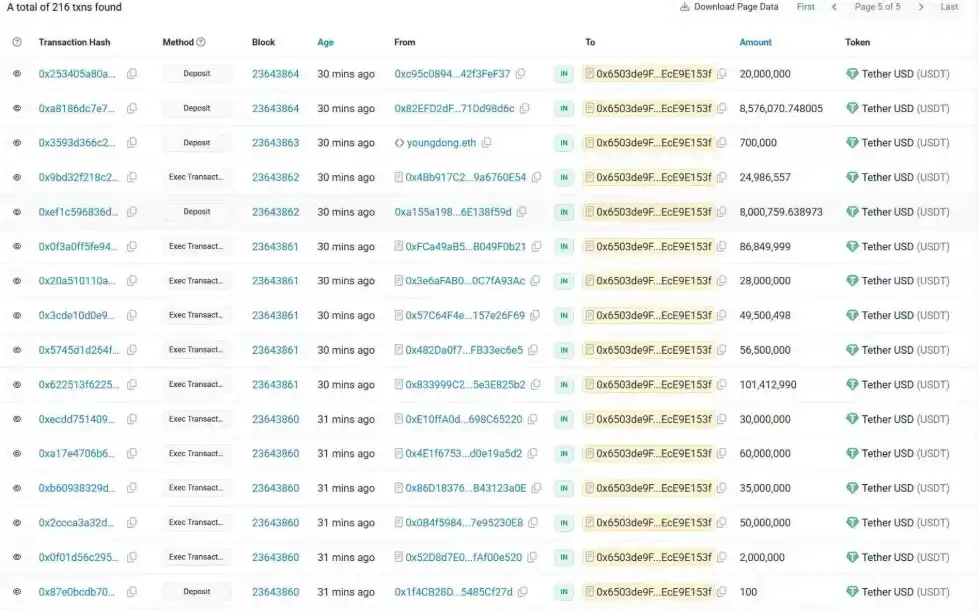
Official Announcement: Large Funds from Multiple Addresses Participated in Pre-Deposit Activity
On-chain data shows that the $825 million pre-deposit amount for this event had already been "pre-sold" for $700 million before the public announcement. Among them, 10 whale addresses collectively deposited around $600 million USDT, and all funds originated from the same wallet address, which was split and filled to the limit within 10 seconds. Further analysis revealed that these funds were all withdrawn from the BTSE CEX before being dispersed into different wallets for participation in the pre-deposit, indicating a unified operation likely conducted by the same capital group. In addition, the funds from these addresses had completed preparation and layout hours before the start of the activity, further fueling community dissatisfaction.
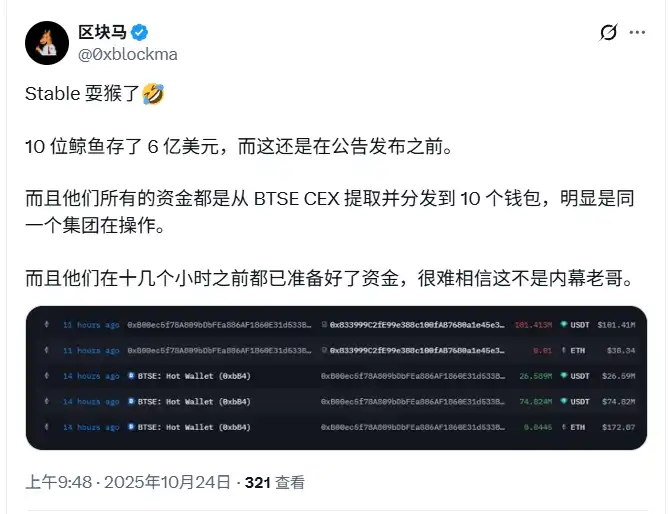
Prior to the pre-deposit event, 10 whale addresses with the same source of funds collectively deposited 600 million USDT
Relatively speaking, ordinary users had little to no participation space. Many users reported that upon entering the official website, they either encountered authorization failures or their transactions were delayed in packaging, and by the time they saw the official tweet, only 0.13 USDT was left on the page to deposit, indicating that while a small amount of allocation appeared available, retail investors were practically unable to participate.
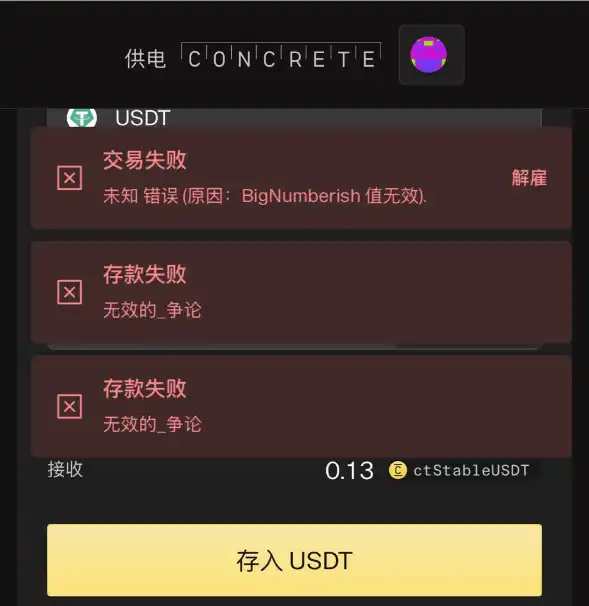
Community Feedback: Upon the official announcement, only 0.13 USDT was left to deposit on the page
According to Dune data, the $825 million pre-deposit event had only 273 addresses participating, with the participation ratio of ordinary users being almost negligible. More notably, among all participating addresses, nearly 40 addresses had deposits lower than 500 USDT, and there were even extremely small deposits of 1 USDT, 3 USDT, 5 USDT, or tens of USDT, leading the community to sarcastically label these small addresses as mere props used to inflate the number of participants, devoid of any real sense of participation.
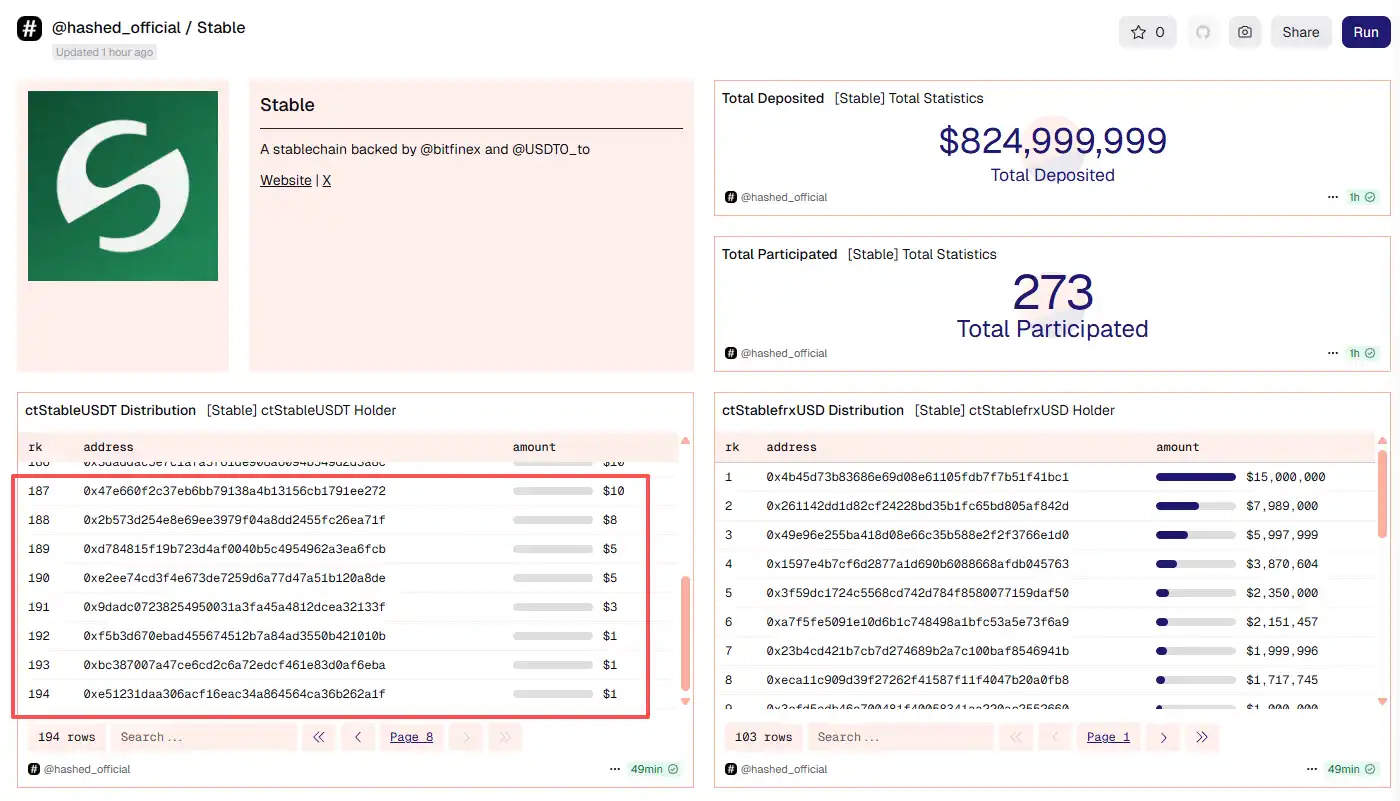
Stablecoin Pre-Deposit Data
Overall, the first phase of the $825 million Stablecoin pre-deposit activity quickly reached its limit. However, community sentiment was highly negative, being described as an "epic-level frontrunning" and a "pre-sale that was predetermined in advance".
Summary
"Insults aside, we still gotta make money." Although the first phase of the Stable project's presale was heavily controversial due to serious "insider trading" issues, considering its endorsement by Tether official and support from top-tier capital, the project still possesses strong market influence and sustained tracking value.
What is more worth paying attention to next is actually the presale activities related to centralized exchanges, especially whether Binance will launch a deposit or participation activity for Stable. Previously, Binance had launched the Plasma (XPL) deposit activity, with the first phase's individual deposit limit as high as $100,000, and subsequent batches could also deposit up to $50,000. Since it is a stablecoin deposit participation, with no principal loss, the yield from selling immediately after XPL's listing reached an annualized rate of up to 79%, becoming one of the highest-yielding projects listed on CEX this year.
From this perspective, Stable is still a project of high priority for attention. While on-chain activities may have already been consumed by large funds, the CEX phase may be the participation window suitable for ordinary retail investors.
-- Price
This content is provided for general informational purposes only and doesn't constitute financial, investment, legal, or tax advice. Any events, rewards, online promotions, or related information mentioned herein should not be considered a recommendation, solicitation, or invitation to purchase, sell, trade, or otherwise deal in any crypto assets. Crypto assets are highly volatile and may result in loss. The availability of WEEX services, products, and related events may vary by region. You are responsible for ensuring that your participation is in accordance with applicable local laws and regulations.
You may also like

USS Washington to Replace USS Lincoln in the Middle East Amid Concerns Over Crew Living Conditions

Nearly four years after Do Kwon was imprisoned, there are still community members steadfastly supporting Terra Luna Classic and looking forward to an "epic revival."

Buffett's Successor Faces Setback, Google Holdings Show $3 Billion Unrealized Loss

Banking Outage in Japan: 128 Banks 'Frozen' at Once

Argentine Bitcoiners Debut “The Genesis Of Satoshi Nakamoto” Artwork In Downtown Buenos Aires

Broadcom (AVGO) : AI Growth, Fund Positioning, and Guarantee Risk
Broadcom (AVGO) recently fell with the semiconductor sector, closing down 10.43% at $291.53 on November 5. The shares rebounded more than 4% in premarket trading on November 6. Concerns that election results could lead to tighter AI rules and slower data center approvals contributed to a broad sell-off, with a semiconductor index falling about 12%. The move appears tied mainly to sector sentiment and policy concerns, with no clear company-specific negative catalyst identified.
Institutional trading and AI growth expectations are also in focus. ARK funds sold about $134 million of Broadcom shares over two sessions while adding to SpaceX. Citi maintained its Buy rating and projected that Broadcom’s AI semiconductor revenue could reach $115 billion in fiscal 2027, roughly doubling year over year. Broadcom had approximately $179.2 billion in signed contracts as of the prior quarter, while analysts estimated fourth-quarter AI chip revenue at about $21.7 billion. These forecasts will need to be tested against future results.
Contingent guarantees are another point for investors to monitor. Broadcom is providing guarantees tied to Anthropic’s AI rack-leasing arrangement, involving about $29 billion in the first phase and a second-phase plan of up to $43 billion. Banks plan to issue $21 billion in bonds to support related chip financing. The guarantee amounts are not the same as debt already incurred, but they add a potential risk to assess. Broadcom is scheduled to report its next quarterly results on December 9, when management’s outlook for fiscal 2027 AI demand will be closely watched. This article is for informational purposes only and is not investment advice.

Netflix (NFLX) Stock Rebounds: Insider Sales, Advertising, and Growth Plans
Several Netflix executives sold company shares in early November 2026. Co-CEO Theodore Sarandos sold 27,312 shares from November 3 to 4, valued at about $1.81 million. CFO Spencer Neumann sold shares worth approximately $612,000. Co-CEO Gregory Peters realized about $1.69 million, including transactions related to tax withholding. Chief Legal Officer David Hyman and director Bradford Smith also reduced their holdings. Executive sales can have different reasons and should not be viewed on their own as a measure of the company’s outlook.
After recent pressure, Netflix shares rebounded more than 4% around November 4. Bill Ackman’s Pershing Square Capital Management allocated about 5% of its portfolio to Netflix, while new AI features and positive views on the company’s technology prospects helped sentiment. Netflix reported third-quarter 2026 revenue of $13.44 billion and earnings per share of $0.87, both above expectations, though its forward outlook remains a key focus.
Advertising is one of Netflix’s main challenges. Delays to key ad product features led the company to reduce its annual advertising revenue outlook from $3 billion to $2.7 billion. Viewer engagement has also faced pressure from changes in content appeal and competition from platforms such as YouTube. Netflix is pursuing growth through live events, gaming, and advertising, with plans to expand its ad-supported offering to 15 markets while adjusting its workforce by about 6% to improve margins. Investors may want to monitor advertising growth, engagement, and profitability. This article is for informational purposes only and is not investment advice.

Carvana Earnings: Record Sales, Strong Profit, and Insider Share Sales
Carvana reported third-quarter net revenue of $8.04 billion, up 42.4% year over year and above the $7.7 billion market estimate. Retail units sold reached a record 217,385, an increase of 39.4%. Net income rose to $483 million, while adjusted EBITDA reached a record $800 million, reflecting gains in both revenue and profitability.
Management expects full-year 2026 adjusted EBITDA to reach the upper end of its $2.7 billion to $3.0 billion range. Needham maintained its Buy rating, named Carvana a top pick in transportation technology, and set a $100 price target. Strong results and guidance have drawn investor attention, though continued performance will depend on sales, margins, and operating costs.
Insider transactions are also on investors’ radar. A regulatory filing indicates that CFO Mark Jenkins planned to sell 63,800 shares on November 2, 2026, valued at approximately $4.35 million. Since August, he has planned sales totaling 191,300 shares. An executive share sale alone does not determine a company’s outlook; investors may also consider earnings, cash flow, and future guidance. This article is for informational purposes only and is not investment advice.

FCEL Stock: Data Center Opportunity, Manufacturing Costs, and Lawsuit Risk
FuelCell Energy (ticker: FCEL) provides fuel-cell power solutions. Growing electricity demand from AI data centers could create new business opportunities, while proposed pauses on new data center approvals in some areas have raised concerns about project timelines. A 75-megawatt power project may be affected, and FCEL shares recently fell as much as about 17% in a single session amid policy concerns.
FCEL signed an agreement with Fit Energy to provide up to 380 megawatts of fuel-cell power solutions. Its backlog is approximately $3.6 billion, with about 97% of its sales pipeline related to data centers. The company also drew the second installment under a $49 million financing arrangement backed by an export credit agency, supporting a green energy project and clean-energy exports. Recent leadership changes include Matthew Latino becoming CFO, digital infrastructure executive Peter Hopper joining the board, and John Dansby leading manufacturing scale-up. Converting orders into revenue will depend on production capacity, costs, and project execution.
FCEL reported third-quarter revenue of about $33 million, down approximately 29% year over year, and a net loss of roughly $45.3 million. Product costs and manufacturing overhead for the Fit Energy agreement exceeded the contract pricing, resulting in an approximately $17 million contract impairment charge. Securities class-action allegations concern disclosures about manufacturing capacity and costs; the case remains in the legal process. The deadline to seek appointment as lead plaintiff is November 10, 2026. FCEL’s growth opportunities come with execution, financing, and litigation risks. This article is for informational purposes only and is not investment advice.

Democratic Party's AI Regulation Push Revealed: Plans for Intensive Legislation and Strict Scrutiny of Tech Giants

PFE Stock: Pfizer’s Q3 2026 Earnings, Business Strategy, and Dividend Outlook
PFE is the New York Stock Exchange ticker for Pfizer Inc. In the third quarter of 2026, Pfizer reported revenue of $16.58 billion and adjusted earnings per share of $0.87, both above market expectations. The company raised its full-year revenue outlook to $62 billion–$64 billion and its adjusted EPS guidance to $2.95–$3.05, pointing to stronger performance than previously expected.
Although demand for COVID-related products continues to decline, Pfizer’s non-COVID business is growing. Third-quarter sales reached $720 million for the cancer drug Padcev and $2.52 billion for Eliquis, up 25% year over year. Revenue from newer and acquired products rose 32%. Pfizer is expanding its oncology pipeline, entering the weight-loss treatment market through its acquisition of Metsera, and targeting approximately $9.7 billion in net cost savings by 2029. Cecile Guegan has also taken over as chief financial officer.
Investors are also watching Pfizer’s dividend and legal developments. The company declared a cash dividend of $0.43 per share, with an ex-dividend date of November 6, 2026. Analysts raised some earnings estimates and price targets following the quarterly results. Pfizer also faces ongoing legal scrutiny related to statements about COVID vaccine safety, while its subsidiary Mylan has sued Novo Nordisk over generic-drug patent issues involving Wegovy. Pfizer’s outlook depends on new-product growth, cost savings, patent matters, and litigation developments. This article is for informational purposes only and is not investment advice.

South Korea’s GOPAX halts crypto trading, withdrawals after hacking threat

Bhutan: A royal decree opens the future central bank's reserves in Gelephu to cryptocurrencies

AI Begins to Shake Google's Search Advertising Business Behind $500 Billion Market Value Erosion

What is the real challenge for South Korean exchanges now that the regulatory framework is in place?

What Is TLT? Long-Term Treasury Bonds After the Midterm Election

Former FBI Agent Pleads Guilty to Stealing $2.5M in Crypto From 35 Investigations

Mr&强 Discusses Bitget Forex Trading Upgrade with Up to 2000x Leverage
Breaking Down Bitcoin Trends: What Determines the True Value of L1?

Chainalysis Attack More Serious Than Expected: User Password Hashes and Active Tokens Leaked

U.S. Stocks Plunge $2.8 Trillion Overnight! Top Silicon Valley VC Reveals: 90% of Open Source Model Spending Goes to China

StockFi: Connecting U.S. Stock with the On-Chain Ecosystem to Reshape Asset Circulation

Cassius Cuvee on Market Euphoria, High Leverage, and How to Stay in the Game

What Do Tokenized Deposits Need to Compete with Stablecoins?

Binance founder CZ warns of critical 10-year-old OpenSSH flaw

A Look at the S&P 500 ETF After the Midterm Election

iPhone Attack Kit 'DarkSword' Suspected of Being Misused for Cryptocurrency Theft, Bitquery Identifies Approximately $4.06 Million in Stolen Funds
Why Did HYPE Soar and Then Fizzle Out After Wall Street Extended an Olive Branch?

What Did Crypto Investors Get for Their $189 Million Bet?

The Coming Crisis in AI Infrastructure: What About USD.AI?
USS Washington to Replace USS Lincoln in the Middle East Amid Concerns Over Crew Living Conditions
Nearly four years after Do Kwon was imprisoned, there are still community members steadfastly supporting Terra Luna Classic and looking forward to an "epic revival."
Buffett's Successor Faces Setback, Google Holdings Show $3 Billion Unrealized Loss
Banking Outage in Japan: 128 Banks 'Frozen' at Once
Argentine Bitcoiners Debut “The Genesis Of Satoshi Nakamoto” Artwork In Downtown Buenos Aires
Broadcom (AVGO) : AI Growth, Fund Positioning, and Guarantee Risk
Broadcom (AVGO) recently fell with the semiconductor sector, closing down 10.43% at $291.53 on November 5. The shares rebounded more than 4% in premarket trading on November 6. Concerns that election results could lead to tighter AI rules and slower data center approvals contributed to a broad sell-off, with a semiconductor index falling about 12%. The move appears tied mainly to sector sentiment and policy concerns, with no clear company-specific negative catalyst identified.
Institutional trading and AI growth expectations are also in focus. ARK funds sold about $134 million of Broadcom shares over two sessions while adding to SpaceX. Citi maintained its Buy rating and projected that Broadcom’s AI semiconductor revenue could reach $115 billion in fiscal 2027, roughly doubling year over year. Broadcom had approximately $179.2 billion in signed contracts as of the prior quarter, while analysts estimated fourth-quarter AI chip revenue at about $21.7 billion. These forecasts will need to be tested against future results.
Contingent guarantees are another point for investors to monitor. Broadcom is providing guarantees tied to Anthropic’s AI rack-leasing arrangement, involving about $29 billion in the first phase and a second-phase plan of up to $43 billion. Banks plan to issue $21 billion in bonds to support related chip financing. The guarantee amounts are not the same as debt already incurred, but they add a potential risk to assess. Broadcom is scheduled to report its next quarterly results on December 9, when management’s outlook for fiscal 2027 AI demand will be closely watched. This article is for informational purposes only and is not investment advice.



