
JPMorgan Q3 Earnings Miss: What’s Next for JPM Stock?

 Prefer us on Google


JPMorgan Chase (NYSE: JPM) reported third-quarter 2026 earnings of $5.57 per share, below the $5.85 analyst estimate reported by Reuters. However, the results showed a mixed picture: equity trading remained strong, net interest income increased, and investment banking fees declined from the previous quarter.
JPM stock initially advanced before reversing. On October 13, shares closed at $331.43, down 0.86%. Investors now face a key question: can revenue growth offset expense pressure and support a recovery?
Readers following upcoming earnings can explore the WEEX U.S. stock earnings prediction event. Registered users can allocate points to bullish or bearish predictions, starting from one point. Submissions cannot be withdrawn, and each round closes 10 minutes before earnings. JPM’s latest prediction window has already closed; other available rounds follow the event page.

For another stock-themed activity, WEEX Dice Rush: Wall Street Tycoon features dice-based gameplay and stock predictions. Participation requirements and rewards follow the published rules.
JPMorgan Q3 Earnings: Key Results
JPMorgan delivered year-over-year growth, although expenses and a significant securities loss complicated the earnings picture.
| Metric | Q3 2026 Result |
|---|---|
| Net income | $15.3 billion, up 6% |
| Diluted EPS | $5.57 |
| EPS excluding a significant item | $5.75 |
| Managed revenue | $50.9 billion, up 8% |
| Net interest income | $27.1 billion, up 13% |
| Noninterest expenses | $27.3 billion, up 12% |
| Credit loss provision | Approximately $2.7 billion |
| Return on tangible common equity | 20% |
Managed revenue and results excluding significant items are non-GAAP measures. Source: JPMorgan’s earnings release.
Securities Losses Affected Reported Earnings
The quarter included $658 million in pretax net investment securities losses, reducing EPS by approximately $0.18. Excluding this item, EPS was $5.75.
Assessing the earnings miss requires distinguishing reported and adjusted figures and checking which basis analysts used.
Expenses Remain a Watchpoint
Expenses grew faster than revenue. Future profitability will depend partly on whether compensation, technology and other investments generate sufficient additional income.
Interest Income, Trading and Credit: What Matters Next?
Net interest income remained a source of strength. Its outlook depends on deposit balances, funding costs, loan growth and asset repricing—not interest rates alone.
Trading results were uneven. Equity Markets revenue increased 49% year over year, while Fixed Income Markets revenue fell 4%. Investment banking fees rose 14% annually but declined 8% sequentially.
These figures suggest strong equity activity alongside slower momentum elsewhere. The sustainability of advisory, underwriting and trading demand will matter more than a single quarter’s growth.
Credit costs also require context. The approximately $2.7 billion provision included $2.2 billion in net charge-offs and a $539 million net reserve build.
Charge-offs reflect recognized losses, while reserve additions account for anticipated risks. Loan growth, delinquencies and borrower repayment trends remain important indicators.
JPM Stock Price Analysis: An Earnings-Day Reversal
JPM’s recent regular-session closing prices show gains before the earnings-day decline.
Date | Closing Price | Daily Change |
|---|---|---|
October 7, 2026 | $329.58 | −0.51% |
October 8, 2026 | $331.42 | +0.56% |
October 9, 2026 | $332.99 | +0.47% |
October 12, 2026 | $334.30 | +0.39% |
October 13, 2026 | $331.43 | −0.86% |
On October 13, JPM opened at $339.97, reached $344.36 and fell to $331.17. Volume was approximately 13.76 million shares, versus 5.55 million the previous session.
Closing near the session low suggests the early rally lacked sustained buying support. Higher volume indicates greater trading activity, but one session cannot establish a long-term reversal or isolate the impact of individual earnings metrics.
These prices refer to underlying JPM shares. WEEX stock tokens and futures have separate pricing mechanisms.
-- Price
JPM Stock Outlook: Recovery or Further Weakness?
The following scenarios use recent historical prices as reference points, rather than guaranteed targets.
Scenario | Condition | Reference Range |
|---|---|---|
Recovery | Reclaiming $334–$336 with stronger volume | $340–$344 |
Consolidation | Support near $330 without sustained upside | $330–$336 |
Further weakness | A sustained break below $330 | $325–$326 |
The ranges reflect recent closing prices and session highs and lows.
Improving earnings expectations and expense efficiency could support a rebound. Rising credit risks or weaker growth forecasts could increase downside pressure.
For related tokenized-asset coverage, see the JPMorgan Chase Tokenized Stock (Ondo) price prediction. JPMon should be distinguished from JPM shares and WEEX Stock Spot 2.0.
How to Access JPM-Linked Products on WEEX
Step 1: Prepare Your Account and Funds
New users can register on WEEX and complete required account checks. WEEX offers spot, futures and TradFi services and publishes Proof of Reserves information.
If you already hold digital assets, select a supported deposit asset and network, obtain your WEEX address, and transfer funds. Sending and receiving networks must match; include a memo or tag where required. Prepare USDT for the selected product.
Otherwise, check WEEX Quick Buy or the WEEX P2P marketplace. Regional availability, payment options and fees follow the displayed terms.
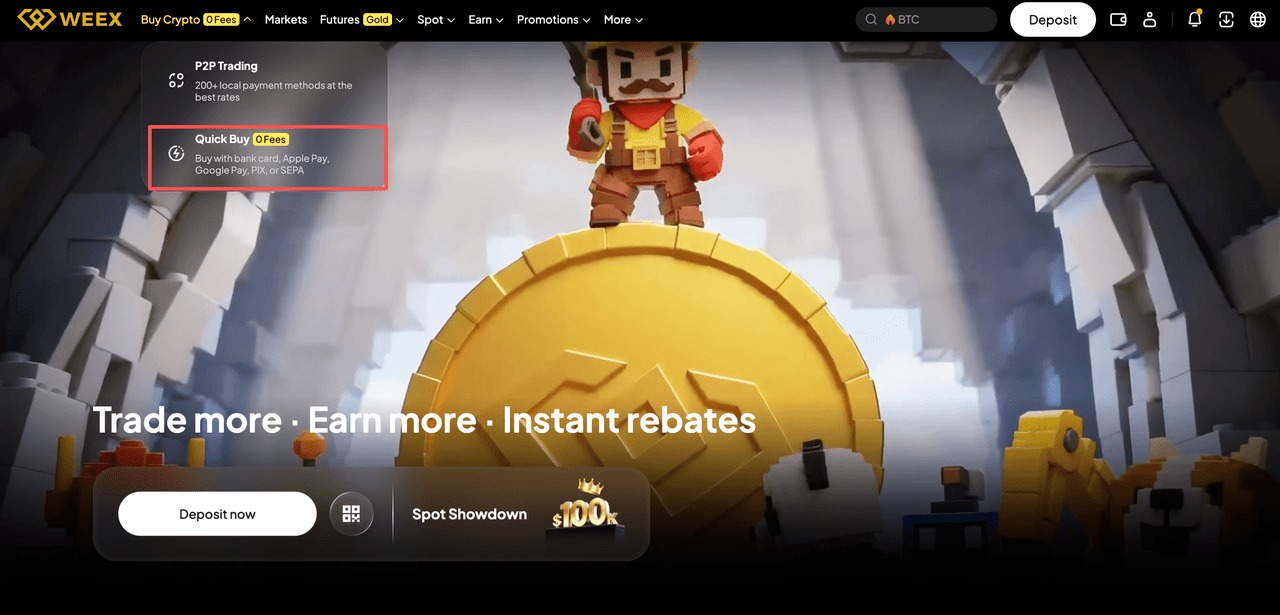
Step 2: Choose Stock Tokens or Futures
Open the JPM/USDT stock token trading pair, or browse the WEEX stock token market.
WEEX Stock Spot 2.0 is distinct from Ondo, xStocks and other third-party tokenized assets. Its synthetic tokens track selected stock or ETF prices and trade using USDT without an external brokerage account.
Tokens do not represent underlying ownership or grant voting, shareholder meeting, dividend or other shareholder rights. Orders are not routed to Nasdaq, NYSE or external brokers. Execution prices are determined by WEEX’s corresponding stock token market.
The JPMorgan Chase Tokenized Stock (Ondo) buying guide covers a separate product category.
Alternatively, access the JPM/USDT futures trading pair or the WEEX TradFi market. Futures involve margin, leverage and liquidation risk.
Step 3: Review and Submit Orders
For stock tokens, enter the quantity, select a supported market or limit order, and review pricing and fees before submitting. Market orders may experience slippage; limit orders may remain unfilled.
For futures, review margin mode, leverage, Long or Short direction and position size. Consider Stop Loss and Take Profit settings, and check liquidation estimates, fees and funding rates.
FAQ
1. Did JPMorgan’s profit decline year over year?
No. Net income increased 6%, although reported EPS missed the analyst estimate cited by Reuters. Growth and expectations are different comparisons.
2. Which JPM stock levels matter next?
Watch support near $330 and whether shares reclaim $334–$336.
3. Do WEEX JPM tokens represent real shares?
No. They are synthetic price-tracking assets without underlying ownership or shareholder rights.
4. Is JPM’s latest earnings prediction still open?
No. Under the event rules, predictions close 10 minutes before earnings.
Related Articles
This content is provided for general informational purposes only and doesn't constitute financial, investment, legal, or tax advice. Any events, rewards, online promotions, or related information mentioned herein should not be considered a recommendation, solicitation, or invitation to purchase, sell, trade, or otherwise deal in any crypto assets. Crypto assets are highly volatile and may result in loss. The availability of WEEX services, products, and related events may vary by region. You are responsible for ensuring that your participation is in accordance with applicable local laws and regulations.
You may also like

Analysis: Stablecoins, Payments, and Prediction Markets Have Become New Growth Points for Crypto Companies, but Profitability Remains Challenged

Nubank Suspends Crypto Withdrawals: What We Know So Far

Buffett's Successor Faces Setback, Google Holdings Show $3 Billion Unrealized Loss

Banking Outage in Japan: 128 Banks 'Frozen' at Once

Argentine Bitcoiners Debut “The Genesis Of Satoshi Nakamoto” Artwork In Downtown Buenos Aires

Broadcom (AVGO) : AI Growth, Fund Positioning, and Guarantee Risk
Broadcom (AVGO) recently fell with the semiconductor sector, closing down 10.43% at $291.53 on November 5. The shares rebounded more than 4% in premarket trading on November 6. Concerns that election results could lead to tighter AI rules and slower data center approvals contributed to a broad sell-off, with a semiconductor index falling about 12%. The move appears tied mainly to sector sentiment and policy concerns, with no clear company-specific negative catalyst identified.
Institutional trading and AI growth expectations are also in focus. ARK funds sold about $134 million of Broadcom shares over two sessions while adding to SpaceX. Citi maintained its Buy rating and projected that Broadcom’s AI semiconductor revenue could reach $115 billion in fiscal 2027, roughly doubling year over year. Broadcom had approximately $179.2 billion in signed contracts as of the prior quarter, while analysts estimated fourth-quarter AI chip revenue at about $21.7 billion. These forecasts will need to be tested against future results.
Contingent guarantees are another point for investors to monitor. Broadcom is providing guarantees tied to Anthropic’s AI rack-leasing arrangement, involving about $29 billion in the first phase and a second-phase plan of up to $43 billion. Banks plan to issue $21 billion in bonds to support related chip financing. The guarantee amounts are not the same as debt already incurred, but they add a potential risk to assess. Broadcom is scheduled to report its next quarterly results on December 9, when management’s outlook for fiscal 2027 AI demand will be closely watched. This article is for informational purposes only and is not investment advice.

Netflix (NFLX) Stock Rebounds: Insider Sales, Advertising, and Growth Plans
Several Netflix executives sold company shares in early November 2026. Co-CEO Theodore Sarandos sold 27,312 shares from November 3 to 4, valued at about $1.81 million. CFO Spencer Neumann sold shares worth approximately $612,000. Co-CEO Gregory Peters realized about $1.69 million, including transactions related to tax withholding. Chief Legal Officer David Hyman and director Bradford Smith also reduced their holdings. Executive sales can have different reasons and should not be viewed on their own as a measure of the company’s outlook.
After recent pressure, Netflix shares rebounded more than 4% around November 4. Bill Ackman’s Pershing Square Capital Management allocated about 5% of its portfolio to Netflix, while new AI features and positive views on the company’s technology prospects helped sentiment. Netflix reported third-quarter 2026 revenue of $13.44 billion and earnings per share of $0.87, both above expectations, though its forward outlook remains a key focus.
Advertising is one of Netflix’s main challenges. Delays to key ad product features led the company to reduce its annual advertising revenue outlook from $3 billion to $2.7 billion. Viewer engagement has also faced pressure from changes in content appeal and competition from platforms such as YouTube. Netflix is pursuing growth through live events, gaming, and advertising, with plans to expand its ad-supported offering to 15 markets while adjusting its workforce by about 6% to improve margins. Investors may want to monitor advertising growth, engagement, and profitability. This article is for informational purposes only and is not investment advice.

Carvana Earnings: Record Sales, Strong Profit, and Insider Share Sales
Carvana reported third-quarter net revenue of $8.04 billion, up 42.4% year over year and above the $7.7 billion market estimate. Retail units sold reached a record 217,385, an increase of 39.4%. Net income rose to $483 million, while adjusted EBITDA reached a record $800 million, reflecting gains in both revenue and profitability.
Management expects full-year 2026 adjusted EBITDA to reach the upper end of its $2.7 billion to $3.0 billion range. Needham maintained its Buy rating, named Carvana a top pick in transportation technology, and set a $100 price target. Strong results and guidance have drawn investor attention, though continued performance will depend on sales, margins, and operating costs.
Insider transactions are also on investors’ radar. A regulatory filing indicates that CFO Mark Jenkins planned to sell 63,800 shares on November 2, 2026, valued at approximately $4.35 million. Since August, he has planned sales totaling 191,300 shares. An executive share sale alone does not determine a company’s outlook; investors may also consider earnings, cash flow, and future guidance. This article is for informational purposes only and is not investment advice.

FCEL Stock: Data Center Opportunity, Manufacturing Costs, and Lawsuit Risk
FuelCell Energy (ticker: FCEL) provides fuel-cell power solutions. Growing electricity demand from AI data centers could create new business opportunities, while proposed pauses on new data center approvals in some areas have raised concerns about project timelines. A 75-megawatt power project may be affected, and FCEL shares recently fell as much as about 17% in a single session amid policy concerns.
FCEL signed an agreement with Fit Energy to provide up to 380 megawatts of fuel-cell power solutions. Its backlog is approximately $3.6 billion, with about 97% of its sales pipeline related to data centers. The company also drew the second installment under a $49 million financing arrangement backed by an export credit agency, supporting a green energy project and clean-energy exports. Recent leadership changes include Matthew Latino becoming CFO, digital infrastructure executive Peter Hopper joining the board, and John Dansby leading manufacturing scale-up. Converting orders into revenue will depend on production capacity, costs, and project execution.
FCEL reported third-quarter revenue of about $33 million, down approximately 29% year over year, and a net loss of roughly $45.3 million. Product costs and manufacturing overhead for the Fit Energy agreement exceeded the contract pricing, resulting in an approximately $17 million contract impairment charge. Securities class-action allegations concern disclosures about manufacturing capacity and costs; the case remains in the legal process. The deadline to seek appointment as lead plaintiff is November 10, 2026. FCEL’s growth opportunities come with execution, financing, and litigation risks. This article is for informational purposes only and is not investment advice.

Democratic Party's AI Regulation Push Revealed: Plans for Intensive Legislation and Strict Scrutiny of Tech Giants

PFE Stock: Pfizer’s Q3 2026 Earnings, Business Strategy, and Dividend Outlook
PFE is the New York Stock Exchange ticker for Pfizer Inc. In the third quarter of 2026, Pfizer reported revenue of $16.58 billion and adjusted earnings per share of $0.87, both above market expectations. The company raised its full-year revenue outlook to $62 billion–$64 billion and its adjusted EPS guidance to $2.95–$3.05, pointing to stronger performance than previously expected.
Although demand for COVID-related products continues to decline, Pfizer’s non-COVID business is growing. Third-quarter sales reached $720 million for the cancer drug Padcev and $2.52 billion for Eliquis, up 25% year over year. Revenue from newer and acquired products rose 32%. Pfizer is expanding its oncology pipeline, entering the weight-loss treatment market through its acquisition of Metsera, and targeting approximately $9.7 billion in net cost savings by 2029. Cecile Guegan has also taken over as chief financial officer.
Investors are also watching Pfizer’s dividend and legal developments. The company declared a cash dividend of $0.43 per share, with an ex-dividend date of November 6, 2026. Analysts raised some earnings estimates and price targets following the quarterly results. Pfizer also faces ongoing legal scrutiny related to statements about COVID vaccine safety, while its subsidiary Mylan has sued Novo Nordisk over generic-drug patent issues involving Wegovy. Pfizer’s outlook depends on new-product growth, cost savings, patent matters, and litigation developments. This article is for informational purposes only and is not investment advice.

South Korea’s GOPAX halts crypto trading, withdrawals after hacking threat

Bhutan: A royal decree opens the future central bank's reserves in Gelephu to cryptocurrencies

AI Begins to Shake Google's Search Advertising Business Behind $500 Billion Market Value Erosion

What is the real challenge for South Korean exchanges now that the regulatory framework is in place?

What Is TLT? Long-Term Treasury Bonds After the Midterm Election

Former FBI Agent Pleads Guilty to Stealing $2.5M in Crypto From 35 Investigations

Mr&强 Discusses Bitget Forex Trading Upgrade with Up to 2000x Leverage
Breaking Down Bitcoin Trends: What Determines the True Value of L1?

Chainalysis Attack More Serious Than Expected: User Password Hashes and Active Tokens Leaked

U.S. Stocks Plunge $2.8 Trillion Overnight! Top Silicon Valley VC Reveals: 90% of Open Source Model Spending Goes to China

StockFi: Connecting U.S. Stock with the On-Chain Ecosystem to Reshape Asset Circulation

Cassius Cuvee on Market Euphoria, High Leverage, and How to Stay in the Game

What Do Tokenized Deposits Need to Compete with Stablecoins?

Binance founder CZ warns of critical 10-year-old OpenSSH flaw

A Look at the S&P 500 ETF After the Midterm Election

iPhone Attack Kit 'DarkSword' Suspected of Being Misused for Cryptocurrency Theft, Bitquery Identifies Approximately $4.06 Million in Stolen Funds

Why Did HYPE Soar and Then Fizzle Out After Wall Street Extended an Olive Branch?

What Did Crypto Investors Get for Their $189 Million Bet?

The Coming Crisis in AI Infrastructure: What About USD.AI?
Analysis: Stablecoins, Payments, and Prediction Markets Have Become New Growth Points for Crypto Companies, but Profitability Remains Challenged
Nubank Suspends Crypto Withdrawals: What We Know So Far
Buffett's Successor Faces Setback, Google Holdings Show $3 Billion Unrealized Loss
Banking Outage in Japan: 128 Banks 'Frozen' at Once
Argentine Bitcoiners Debut “The Genesis Of Satoshi Nakamoto” Artwork In Downtown Buenos Aires
Broadcom (AVGO) : AI Growth, Fund Positioning, and Guarantee Risk
Broadcom (AVGO) recently fell with the semiconductor sector, closing down 10.43% at $291.53 on November 5. The shares rebounded more than 4% in premarket trading on November 6. Concerns that election results could lead to tighter AI rules and slower data center approvals contributed to a broad sell-off, with a semiconductor index falling about 12%. The move appears tied mainly to sector sentiment and policy concerns, with no clear company-specific negative catalyst identified.
Institutional trading and AI growth expectations are also in focus. ARK funds sold about $134 million of Broadcom shares over two sessions while adding to SpaceX. Citi maintained its Buy rating and projected that Broadcom’s AI semiconductor revenue could reach $115 billion in fiscal 2027, roughly doubling year over year. Broadcom had approximately $179.2 billion in signed contracts as of the prior quarter, while analysts estimated fourth-quarter AI chip revenue at about $21.7 billion. These forecasts will need to be tested against future results.
Contingent guarantees are another point for investors to monitor. Broadcom is providing guarantees tied to Anthropic’s AI rack-leasing arrangement, involving about $29 billion in the first phase and a second-phase plan of up to $43 billion. Banks plan to issue $21 billion in bonds to support related chip financing. The guarantee amounts are not the same as debt already incurred, but they add a potential risk to assess. Broadcom is scheduled to report its next quarterly results on December 9, when management’s outlook for fiscal 2027 AI demand will be closely watched. This article is for informational purposes only and is not investment advice.
Contents
Latest articles


Latest coin listings on WEEX


