
What is Tribe perpetual (TMX) Coin? A Comprehensive Guide

 Prefer us on Google


Tribe perpetual (TMX) is the native utility token for Tribe DEX, a decentralized futures exchange built on Arbitrum to offer fast, secure, and low-cost trading. Following its recent launch on WEEX which began on September 22, 2025, TMX provides users with access to automated trading bots, staking rewards, and liquidity mining within a private, no-KYC environment. This positions it as a noteworthy contender in the evolving landscape of decentralized finance (DeFi).
As someone who has tracked the growth of decentralized derivatives for years, I've seen many projects promise speed and low fees. Tribe DEX's decision to build on an Ethereum Layer-2 solution like Arbitrum is a solid technical choice that addresses the core challenges of scalability that have plagued earlier DeFi platforms.
A Closer Look at the Tribe perpetual Ecosystem
At its heart, Tribe perpetual is a decentralized futures exchange, often called a derivatives DEX. Unlike centralized exchanges where a company holds your funds and facilitates trades, a DEX like Tribe operates on smart contracts, allowing for peer-to-peer trading without intermediaries. This model enhances security and privacy, as users retain control of their assets and are not required to complete Know Your Customer (KYC ) verification.
The choice of Arbitrum as its foundational network is critical. Arbitrum is a Layer-2 scaling solution for Ethereum, meaning it processes transactions off the main Ethereum chain, bundles them up, and then submits a single proof back to Ethereum. For the end-user, this translates into significantly faster transaction speeds and drastically lower fees compared to trading directly on Ethereum's mainnet. This technical advantage is crucial for derivatives trading, where speed and cost-efficiency are paramount. The recent news that TMX was listed on WEEX signals growing market confidence in platforms that effectively leverage such L2 solutions.
Who Created Tribe perpetual Crypto?
The development team behind Tribe perpetual follows a common practice within the DeFi space by remaining pseudonymous. This approach is often chosen to uphold the principles of decentralization, shifting the focus from individual founders to the community and the technology itself. While the identities of the creators are not public, the project's direction and code are transparent and can be audited by the public via their smart contract on Arbiscan. This model encourages governance and development to be driven by the token holders and the community over time, rather than a centralized corporate entity.
How Does Tribe perpetual Crypto Work?
The mechanics of Tribe perpetual are designed to create a self-sustaining ecosystem for traders and liquidity providers. It combines several core DeFi components to deliver its services.
The Tribe Liquidity Pool (TLP)
The backbone of the exchange is the Tribe Liquidity Pool (TLP). This is a multi-asset pool where users can deposit assets like ETH, BTC, or stablecoins. This pool serves as the direct counterparty for all trades on the platform. When a trader opens a long position and profits, the payout comes from the TLP; conversely, when they incur a loss, their liquidated collateral goes into the TLP. In return for providing this liquidity, users earn a substantial portion of the platform's trading fees, creating a passive income stream.
Advanced Trading Tools
To appeal to both novice and experienced traders, Tribe DEX has integrated automated trading bots. These are not just novelties; they are powerful tools for executing strategies without constant monitoring.
- DCA (Dollar-Cost Averaging) Bot: This bot allows users to automatically invest a fixed amount of money at regular intervals, which can help mitigate the impact of volatility and smooth out the average entry price.
- Grid Bot: This tool is designed to profit from market fluctuations. It automatically places a series of buy and sell orders within a predefined price range, capturing small profits as the price moves up and down.
Dynamic Yield Optimization
The protocol also features a dynamic yield optimization mechanism. This system intelligently adjusts the rewards for staking TMX and providing liquidity to the TLP based on market conditions and platform usage. The goal is to ensure that providing capital to the ecosystem remains attractive and sustainable, balancing the rewards to maintain deep liquidity, which is essential for a smooth trading experience.
-- Price
What is the TMX Token Used For?
The TMX token is the central pillar of the Tribe perpetual ecosystem, with its value directly tied to the platform's utility and growth. Its primary uses are designed to incentivize participation and reward long-term holders.
The most direct utility is staking. By staking TMX tokens, holders are entitled to a share of the fees generated by the protocol from trading activities. The project's documentation highlights potential APYs ranging from 200% to 500%, although from my experience, these figures are highly dynamic and dependent on trading volume. Higher platform usage leads to more fees, which in turn increases staking rewards.
Furthermore, TMX is integral to the liquidity provision process. While users contribute various assets to the TLP, holding and staking TMX can offer boosted rewards, making liquidity provision even more profitable. This creates a reflexive loop: as more people use the platform, rewards increase, encouraging more liquidity and TMX staking, which in turn strengthens the entire ecosystem.
A Comprehensive Guide on How to Buy TMX Coin on WEEX
With the TMX token now actively trading, acquiring it is straightforward. WEEX has made the process accessible for new and existing users.
First, you'll need an account. If you don't have one, you can register a WEEX account; the process is typically quick and simple.
Next, you need to fund your account. You can deposit cryptocurrency, such as USDT, into your WEEX spot wallet. This will be the currency you use to purchase TMX.
Once your account is funded, you can proceed to trade. Navigate directly to the TMX/USDT trading page. Here, you can place a market order to buy TMX at the current price or set a limit order to purchase it at a specific price point you are comfortable with.
Is Tribe perpetual (TMX) Coin a Good Investment?
Evaluating TMX as an investment requires a balanced look at its potential and the inherent risks. The project enters a competitive niche of decentralized derivatives, with established players like dYdX and GMX. However, Tribe DEX's focus on user-friendly tools like trading bots and its foundation on the efficient Arbitrum network give it a strong value proposition.
The potential for TMX's value appreciation is directly linked to the adoption and trading volume of the Tribe DEX platform. If the exchange successfully attracts a significant user base, the demand for TMX for staking and earning protocol fees could drive its price upward. The no-KYC aspect is a powerful draw for users who prioritize privacy, which is a continuously growing segment of the crypto market.
However, the risks cannot be overlooked. As with any DeFi protocol, there is always smart contract risk—the potential for bugs or exploits in the code. Furthermore, the value of TMX will likely be highly volatile, especially in its early stages. Regulatory pressures on no-KYC platforms also remain a persistent, long-term risk factor in the industry.
From my perspective as a trader, I see TMX as a high-risk, potentially high-reward asset. Its success hinges entirely on the platform's ability to execute its vision, maintain security, and build a vibrant community of traders and liquidity providers.
In conclusion, Tribe perpetual and its TMX token represent an ambitious effort to carve out a space in the on-chain derivatives market. By leveraging Arbitrum's speed and providing practical tools, it addresses key user pain points. While the journey ahead is challenging, its recent listing offers crypto enthusiasts a new opportunity to engage with the cutting edge of decentralized finance.
DISCLAIMER: WEEX and affiliates provide digital asset exchange services, including derivatives and margin trading, only where legal and for eligible users. All content is general information, not financial advice-seek independent advice before trading. Cryptocurrency trading is high-risk and may result in total loss. By using WEEX services you accept all related risks and terms. Never invest more than you can afford to lose. See our Terms of Use and Risk Disclosure for details.
This content is provided for general informational purposes only and doesn't constitute financial, investment, legal, or tax advice. Any events, rewards, online promotions, or related information mentioned herein should not be considered a recommendation, solicitation, or invitation to purchase, sell, trade, or otherwise deal in any crypto assets. Crypto assets are highly volatile and may result in loss. The availability of WEEX services, products, and related events may vary by region. You are responsible for ensuring that your participation is in accordance with applicable local laws and regulations.
You may also like

Ethereum Economic Zone Unveils 3 Rollup Demos With 91% Lower L1 Gas

Binance Hack Explained: What Is Confirmed, What Is Disputed and What Users Should Do Now

How to Convert ETH to USDT on WEEX: Step-by-Step Guide
How to Convert BTC to ETH on WEEX: Step-by-Step Guide
How to Convert USDT to BTC on WEEX: Step-by-Step Guide
Ethereum Funding Rate: How It Works and Why It Dropped Near Zero
Crypto Liquidation Heatmap: Reading the $972M Oct. 15 Long Flush
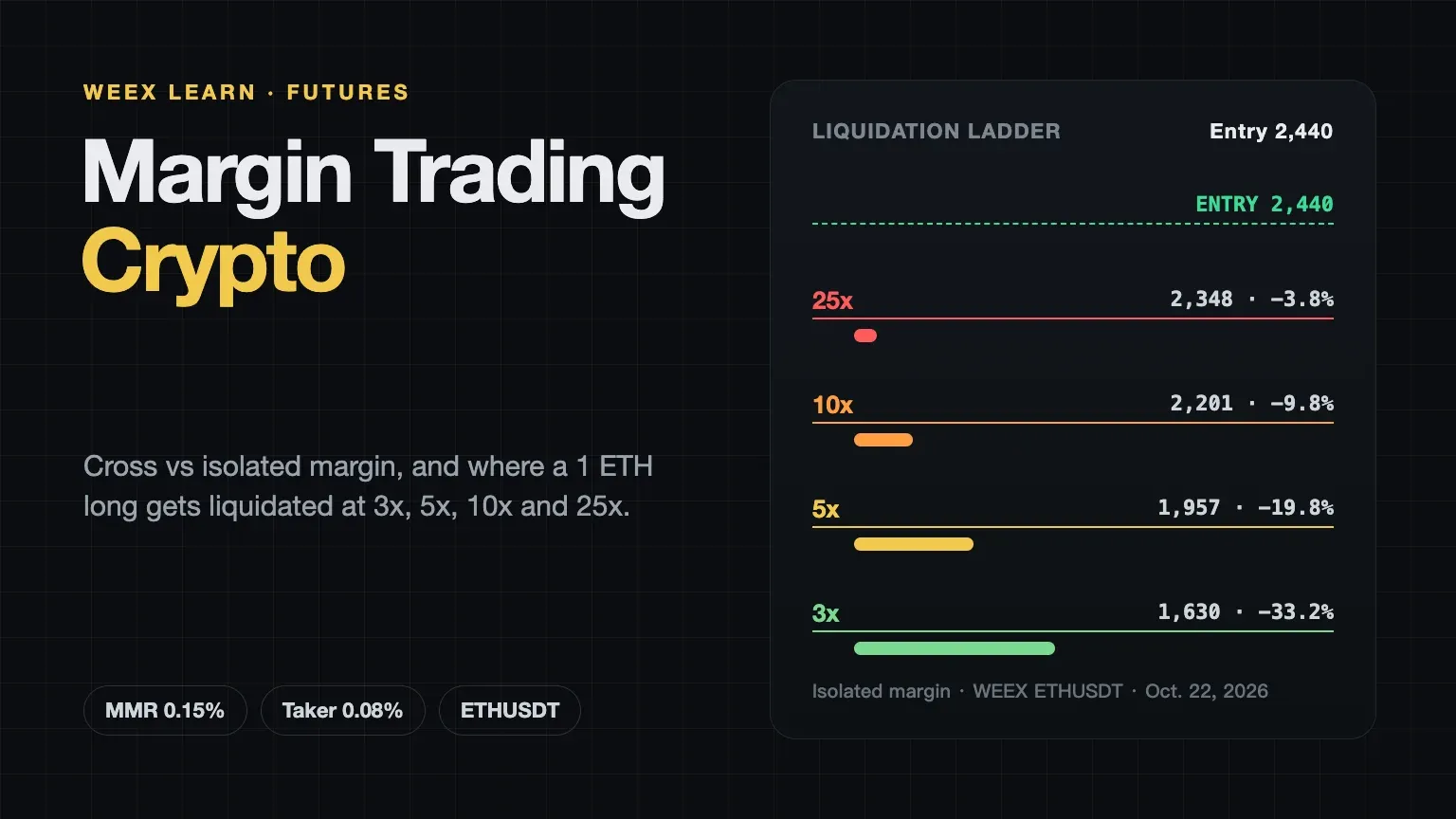
Margin Trading Crypto: Cross vs Isolated and Liquidation Math
How to Convert BTC to USDT: A Step-by-Step WEEX Guide
xStocks Crypto Explained: What Tokenized Stocks Are, How They Work and What Holders Should Check
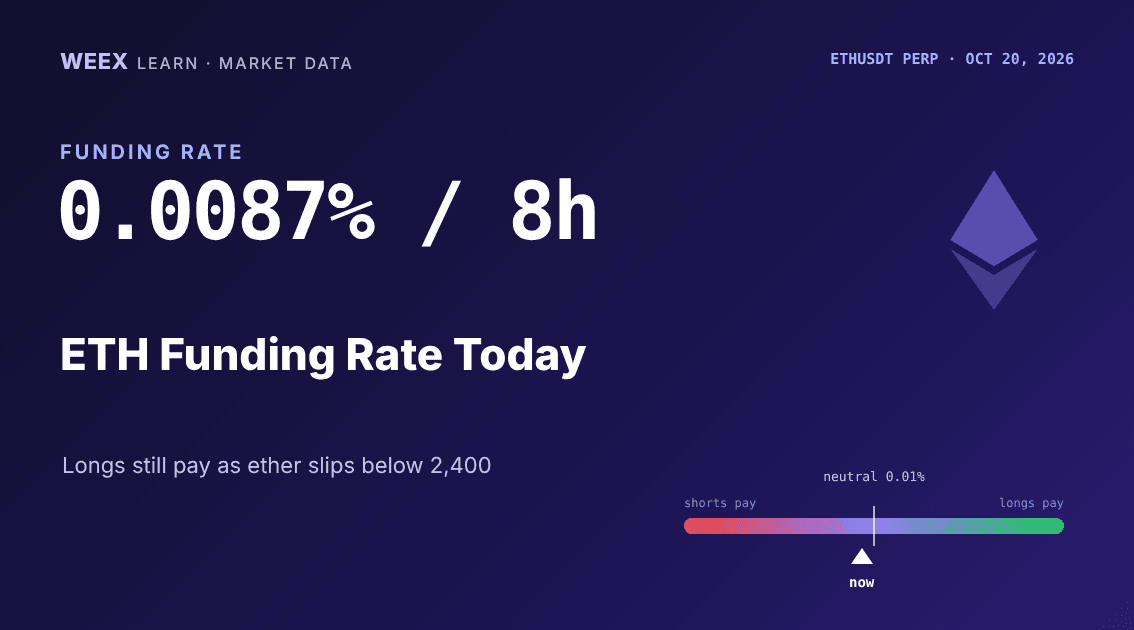
ETH Funding Rate Today: 0.0087% per 8h as Ether Longs Re-Lever

What Is Blockchain and How Does It Work? One Transaction, Traced

Staking APR vs Inflation: How Much of Your Crypto Yield Is Real?

WEEX Convert Fees: What Zero-Fee Conversion Really Costs You
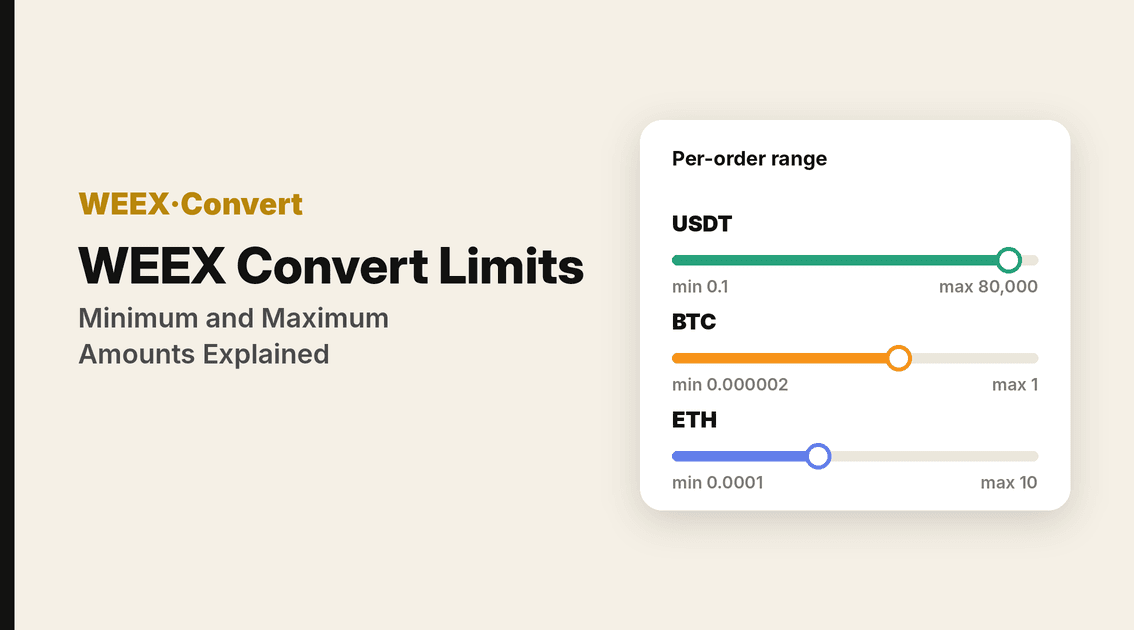
WEEX Convert Limits: Minimum and Maximum Amounts Explained

WEEX Convert Quote: How the 8-Second Price Lock Really Works
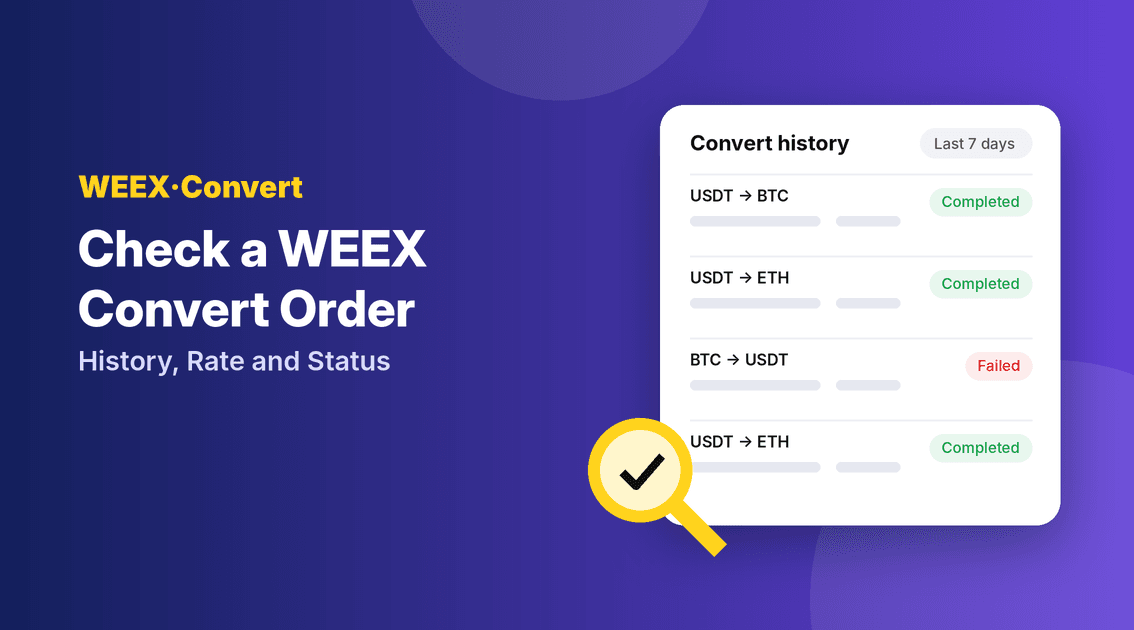
How to Check a WEEX Convert Order: History, Rate and Status
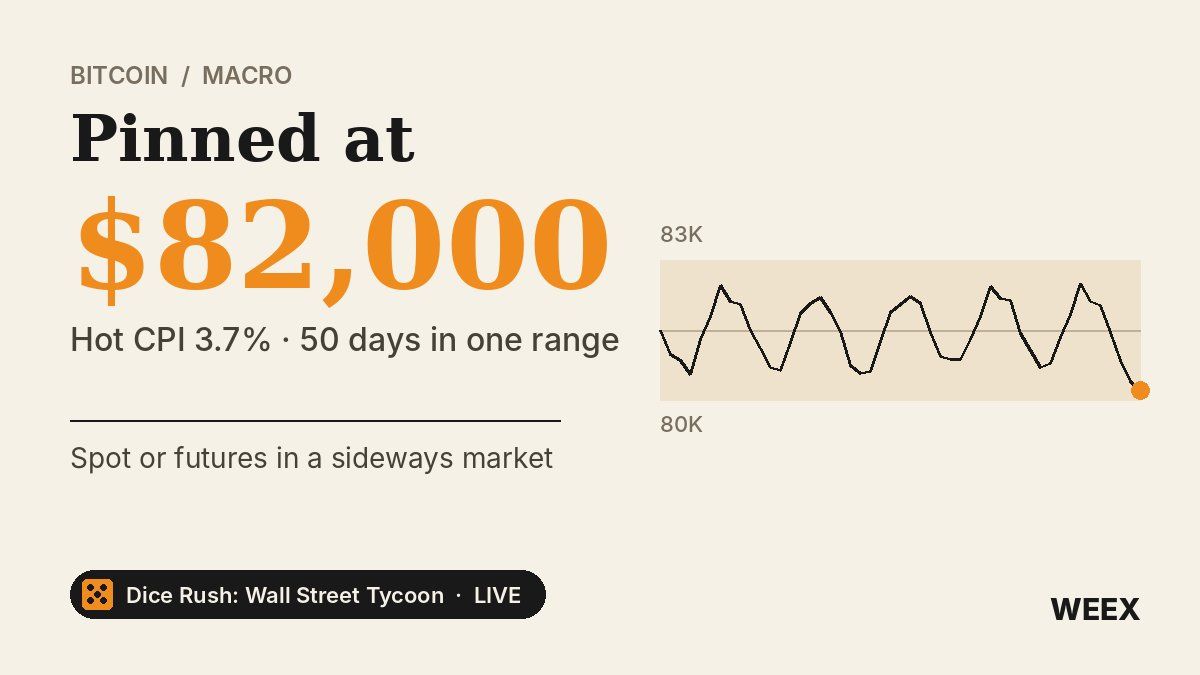
Bitcoin Price After Hot CPI: Why BTC Is Pinned Near $82,000
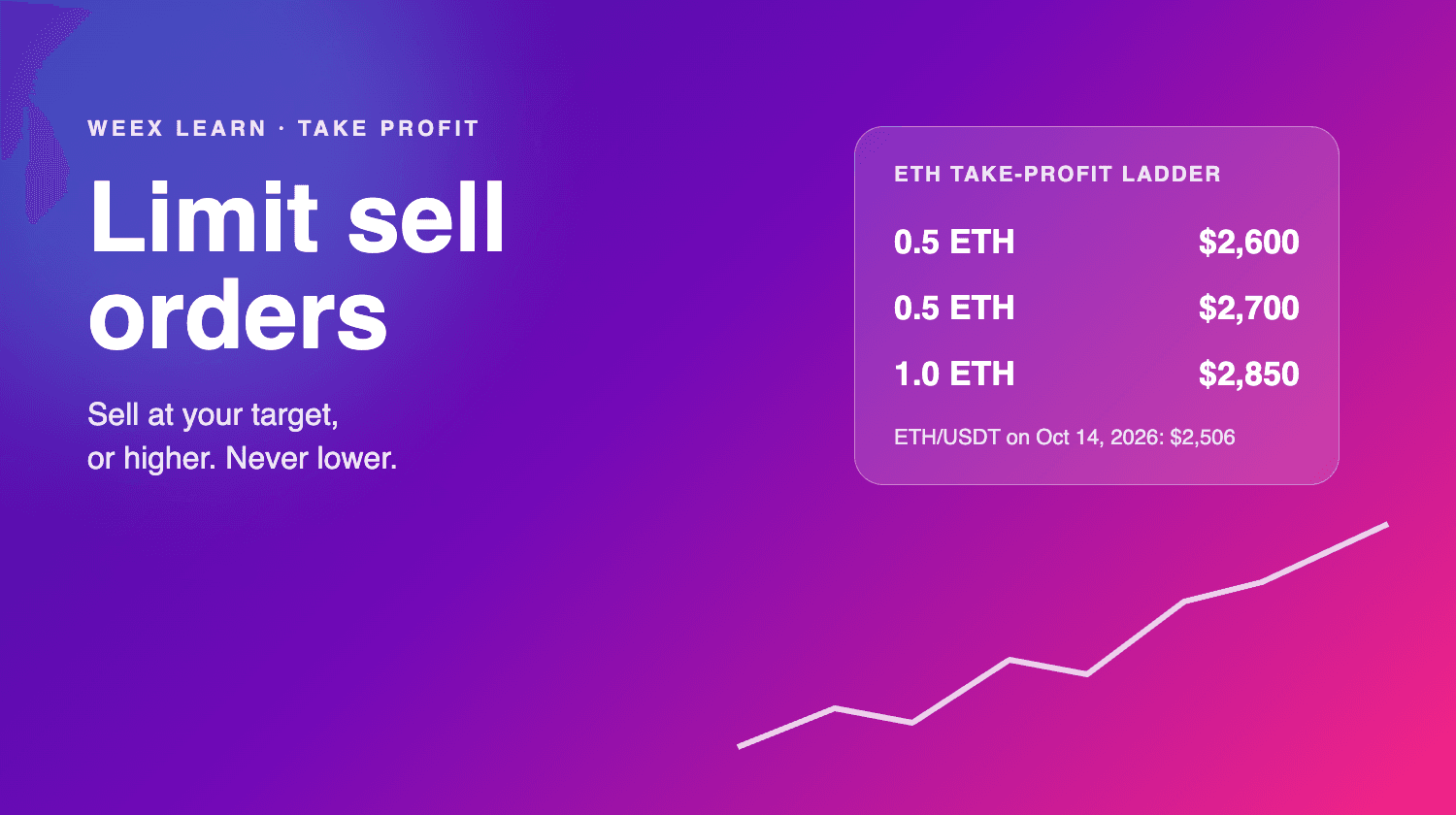
Limit Sell Order: How to Set a Take-Profit Price in Crypto

Best Crypto Podcasts for Beginners: A 4-Week Listening Plan

What Is Plume (PLUME)? Why the RWA Token Stays 93% Below Its High Even After the Layer 2 Rally
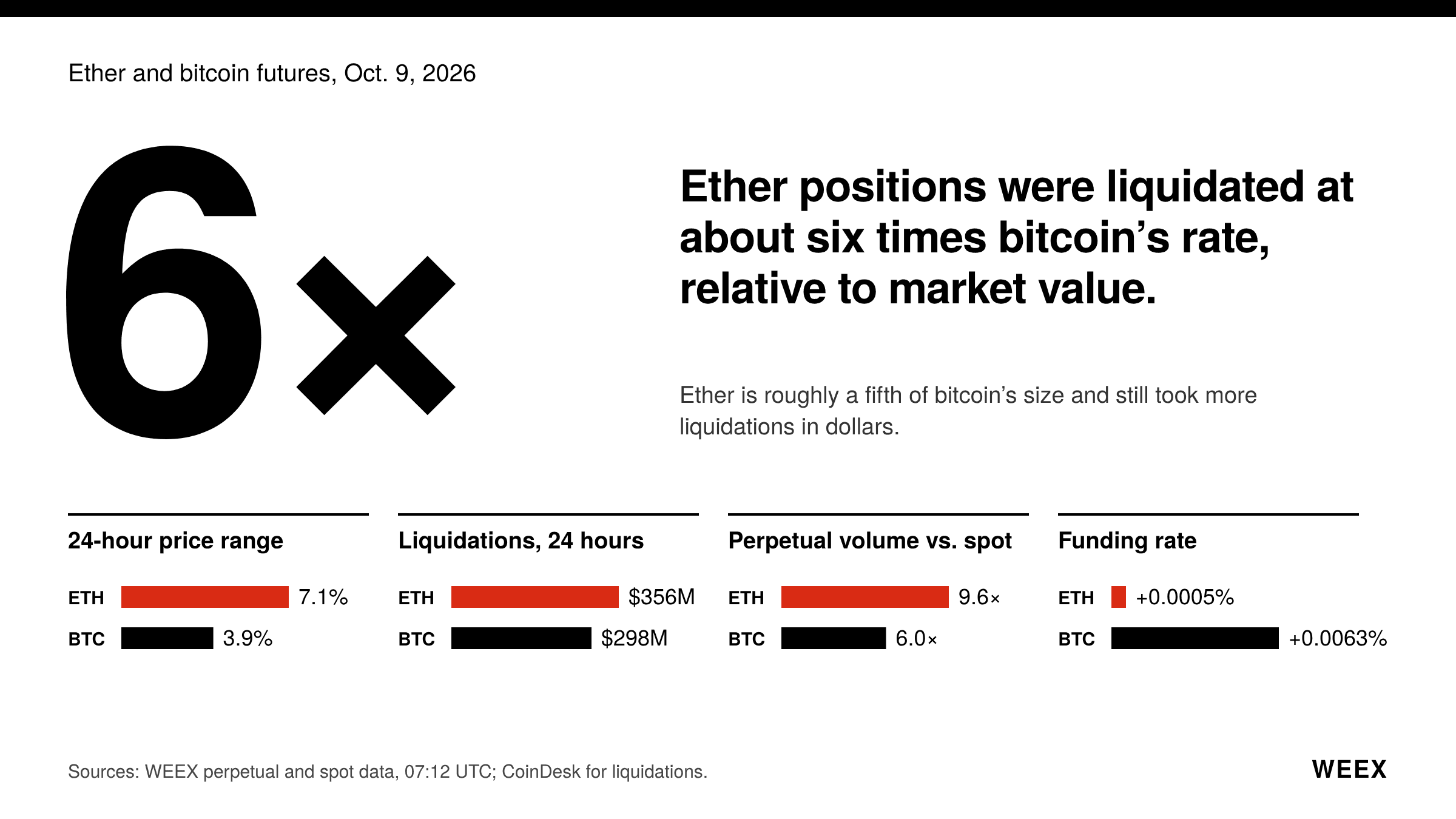
ETH Futures: Why Ether Is Falling Faster Than Bitcoin This Week
How to Buy Presale Crypto: Step by Step Guide for Beginners

Ethereum Glamsterdam Hits 200M Gas on Sepolia: What Changes After the Upgrade?

What Is Staking? 4 Myths to Clear Up Before You Stake Crypto
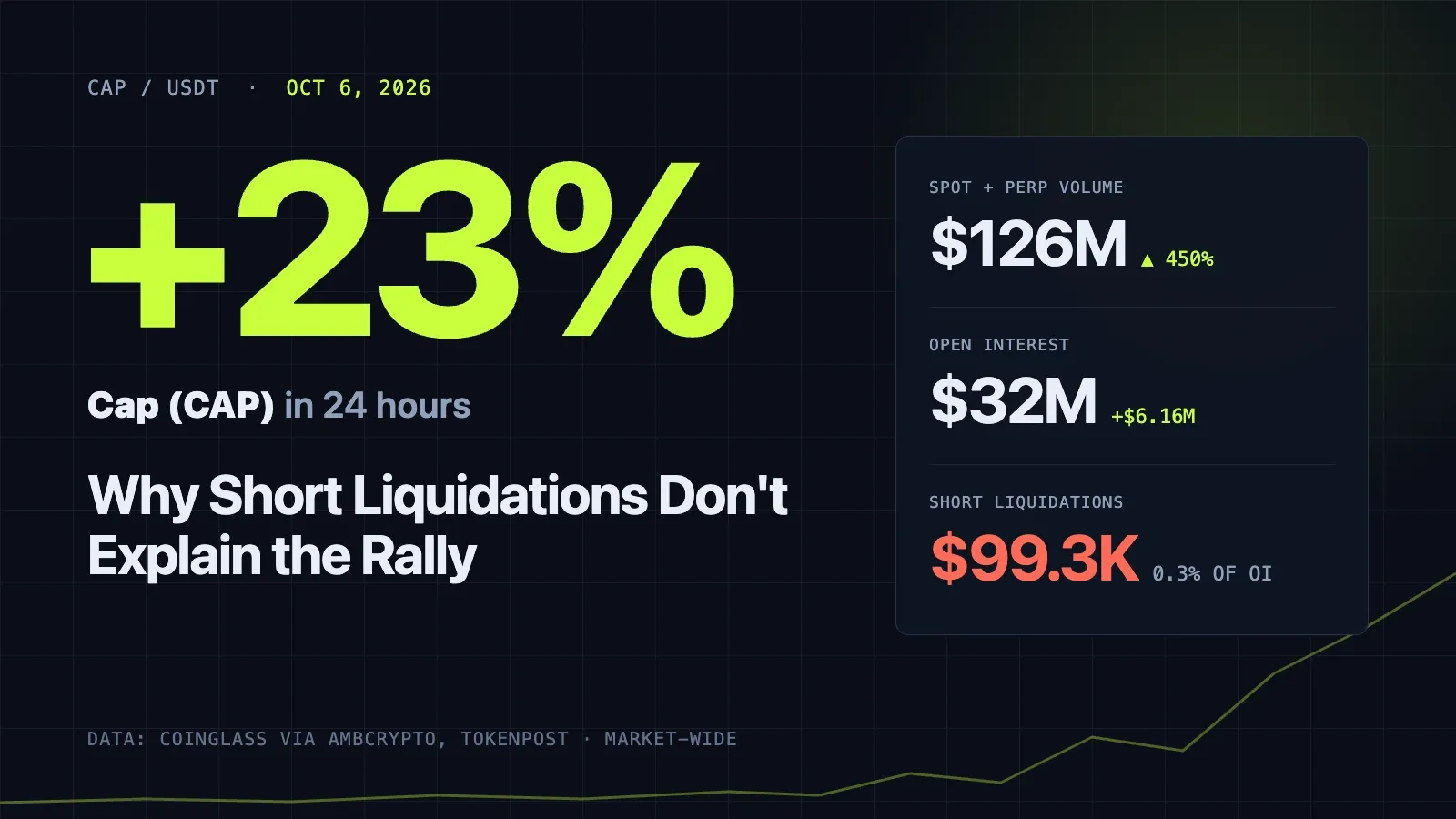
CAP Price Up 23%: Why Short Liquidations Don't Explain the Rally
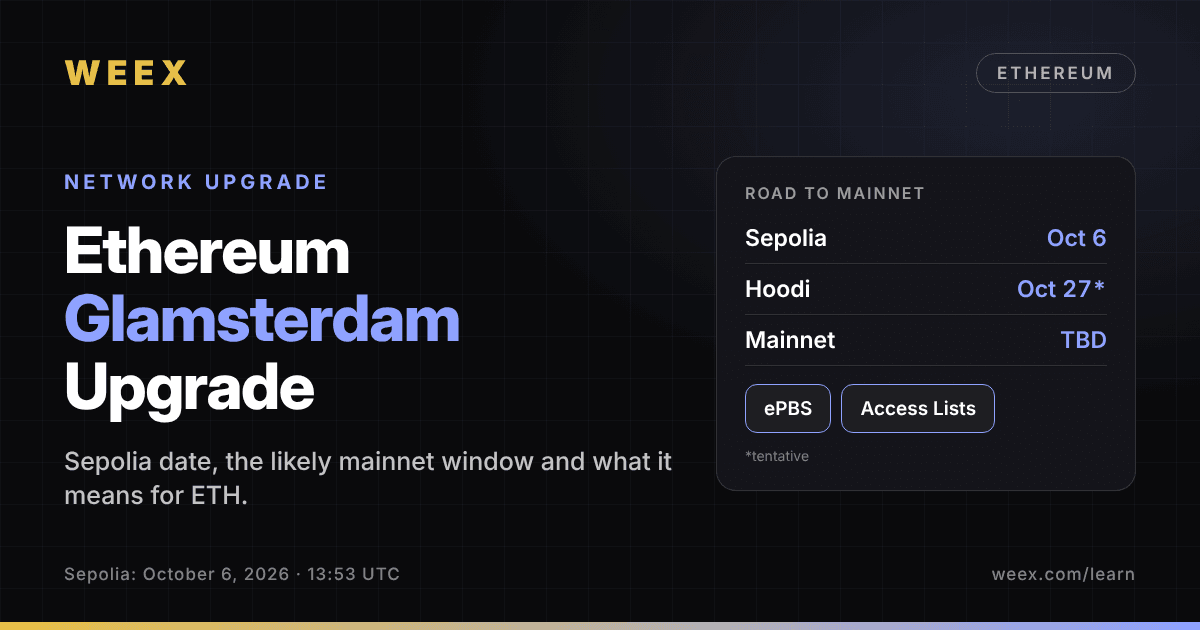
Ethereum Glamsterdam Upgrade: Sepolia Date and ETH Price Impact
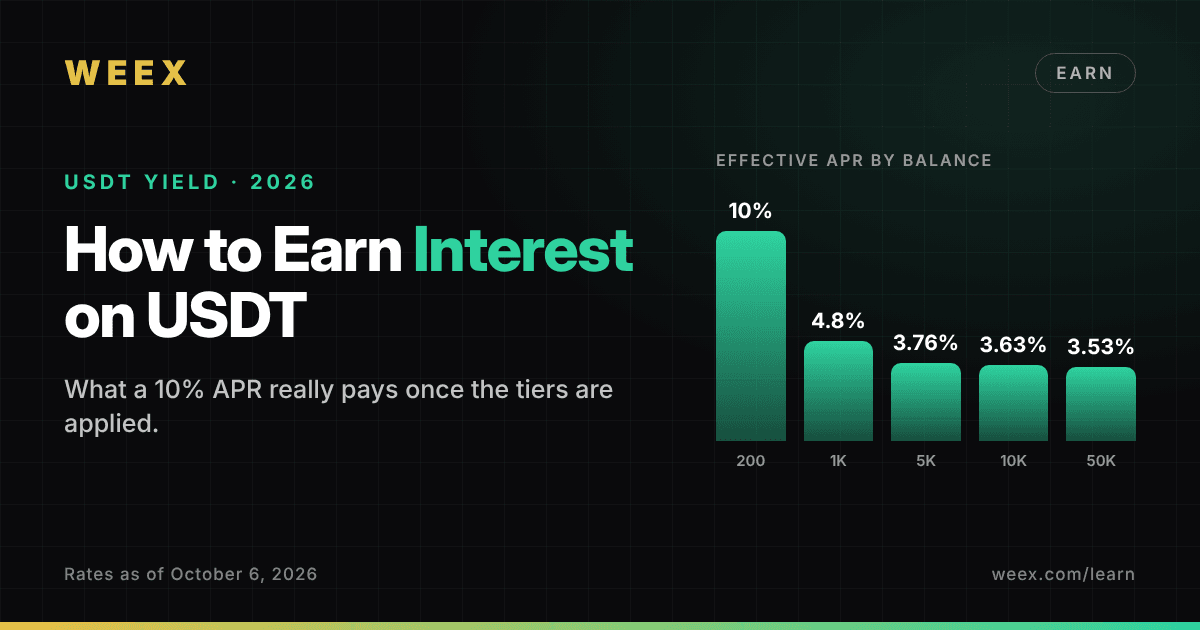
How to Earn Interest on USDT: What a 10% APR Really Pays in 2026

How to Buy Crypto With Apple Pay in 5 Steps: Why Your Bank May Decline the Payment
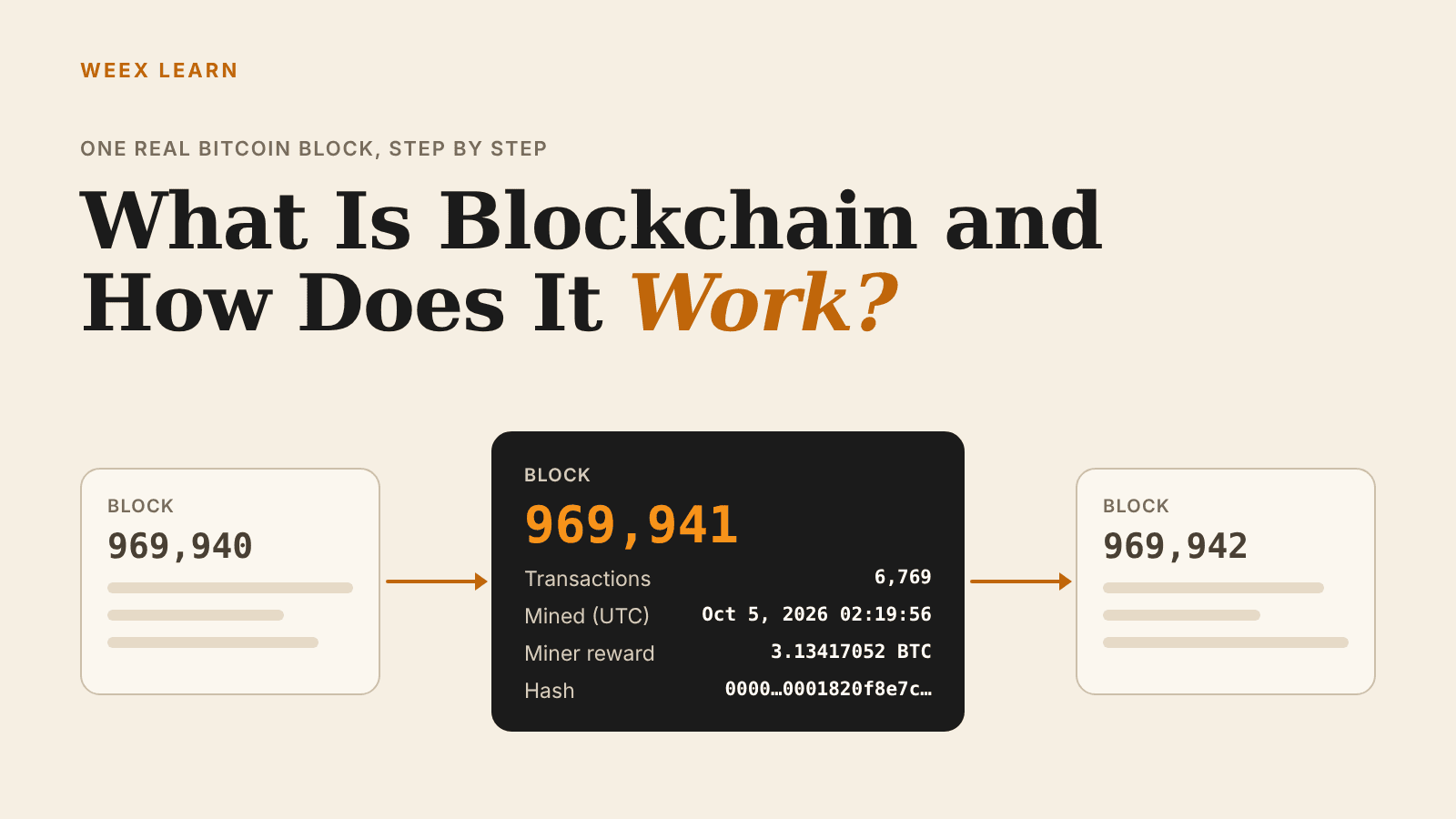
What Is Blockchain and How Does It Work? One Real Block Explained
Ethereum Economic Zone Unveils 3 Rollup Demos With 91% Lower L1 Gas
Binance Hack Explained: What Is Confirmed, What Is Disputed and What Users Should Do Now
How to Convert ETH to USDT on WEEX: Step-by-Step Guide
How to Convert BTC to ETH on WEEX: Step-by-Step Guide
How to Convert USDT to BTC on WEEX: Step-by-Step Guide
Ethereum Funding Rate: How It Works and Why It Dropped Near Zero
Contents
Popular coins
Latest articles


